



Category humanitarian aid
June 1
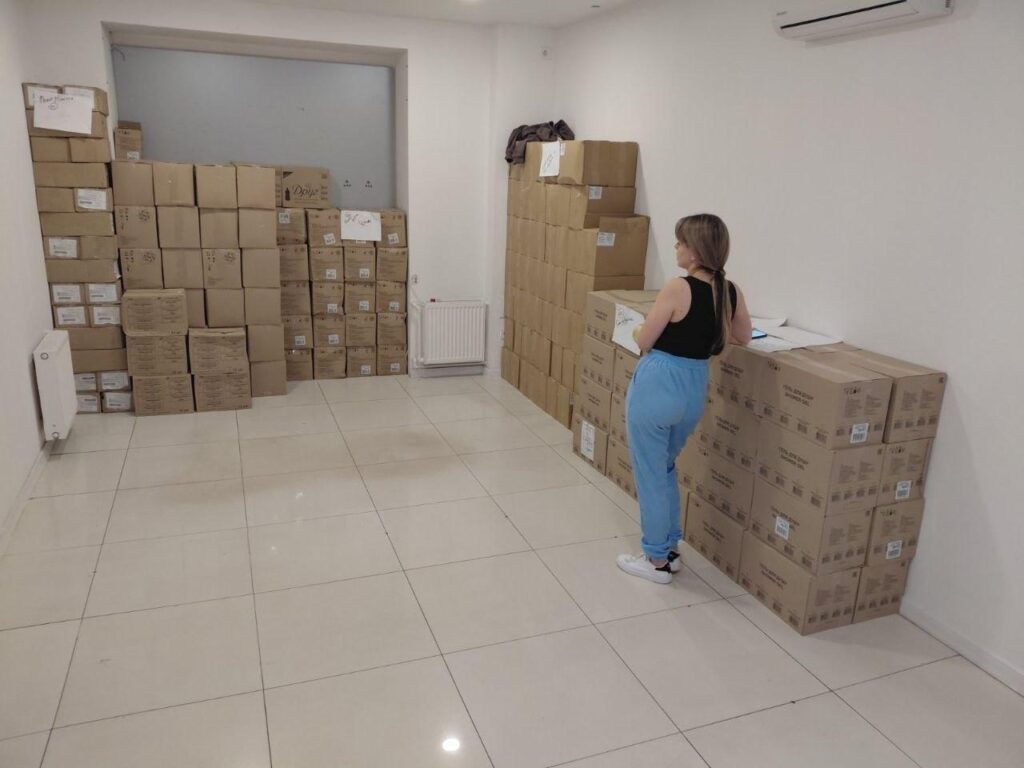
Ukraine: 15 tons of personal hygiene products delivered to Kharkiv to support displaced persons.
Humanitarian Aid in Ukraine: 15 metric tons of personal hygiene products delivered to Kharkiv. An initiative to support the displaced population: over 1,500 beneficiaries, including 60% with disabilities. In a context still marked by severe tensions and ongoing risks for the civilian population, a new humanitarian operation has made it possible to deliver concrete aid to the city of Kharkiv, one of the areas hardest hit by the conflict in Ukraine. Despite a particularly challenging weekend in terms of operations and security, our colleague Olga, who was on the ground, managed to receive approximately 15 metric tons of personal hygiene products intended to support 1,545 internally displaced persons. The Acqua Viva Project and Support from AICS Kiev This is an initiative of great humanitarian importance, especially considering that at least 60% of the beneficiaries are people with disabilities, who are often among the most vulnerable groups and most exposed to the consequences of war, isolation, and a lack of essential services. The supply includes essential items for daily care and hygiene—goods that, in emergency situations, take on fundamental importance not only from a health perspective but also in terms of personal dignity and the protection of living conditions for people forced to leave their homes. This operation was made possible thanks to the “Acqua Viva 04/UCr/13157/2026” project, funded by AICS Kiev, and represents a further step in supporting Ukrainian civilian communities that continue to face the daily consequences of the conflict. POBIC’s commitment to standing alongside war-affected communities. In areas where access to basic necessities can become extremely difficult, collaboration between local workers, humanitarian organizations, and international partners ensures the continuity of aid and tangible support for the most vulnerable people. Through initiatives like this, POBIC continues to support humanitarian assistance efforts aimed at populations affected by the war, contributing to the distribution of essential goods and providing support to the most vulnerable segments of the civilian population. In situations of forced displacement, access to personal hygiene products is an essential need that is often underestimated. Soap, detergents, personal care products, and other everyday items help not only prevent health problems but also preserve the dignity and well-being of people living in particularly vulnerable conditions. THANKS TO YOUR SUPPORT, WE SAVE THE LIVES OF DOZENS OF CHILDREN EVERY YEAR. HELP US DO EVEN MORE. Countries 0 Children operated on 0 Children examined 0 +
READ MORE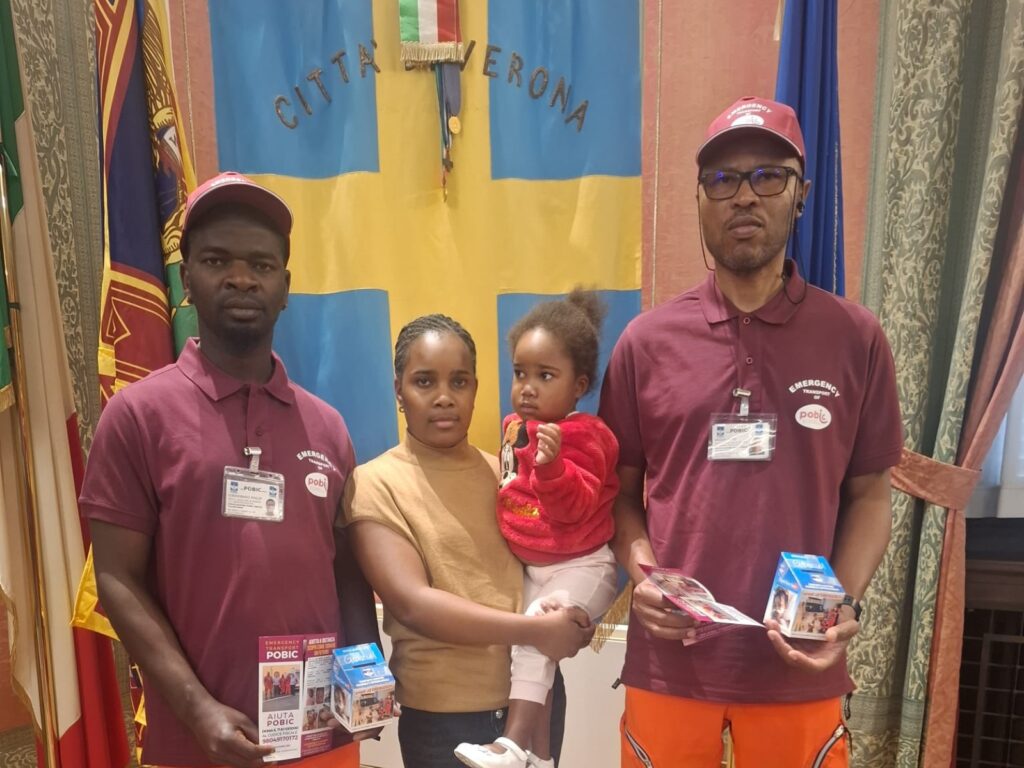
May 9
Jeremiah and Perl, two new lives saved thanks to the POBIC solidarity network
Jeremiah and Perl: Two More Lives Saved Thanks to Pobic’s Network of Solidarity Jeremiah and Perl: Two Children Who Underwent Heart Surgery Thanks to Pobic Jeremiah and Perl are two children who arrived from Uganda with a concrete hope: to receive the treatment they needed to address a serious heart condition. Thanks to POBIC’s efforts, both underwent heart surgery in Italy and today stand as a new testament to what solidarity can achieve when it translates into organization, care, and continuity. Their stories are not isolated incidents. Jeremiah and Perl are, in fact, the 97th and 98th children accompanied by POBIC on a life-saving treatment journey. This milestone reflects years of work, international partnerships, collaboration with specialized healthcare facilities, and a constant presence alongside the children and their families. In total, throughout its history, POBIC has supported 423 children: a number that concretely illustrates the depth of a commitment built over time. Solidarity Donation Boxes in Verona: 1,000 Business Owners Supporting POBIC Behind every surgery, there is more than just an operating room. There is a network of people, communities, and small daily gestures that, over time, make something extraordinary possible. A key role is also played by the approximately 1,000 Verona business owners who, for twenty years, have hosted POBIC’s donation boxes. Bars, shops, and local businesses thus become vibrant hubs of widespread solidarity—places where even a small contribution can turn into something enormous: a trip, a surgical procedure, a new chance at life. It is precisely this quiet and tangible network that makes POBIC’s work possible. Solidarity, when shared and nurtured over time, ceases to be an abstract concept and becomes a force capable of transcending borders, distances, and difficulties. https://www.pobic.org/wp-content/uploads/2026/05/h264_yuv420p_858_480_25_1300_aac_64_48000_2.mp4 Thoughts and Colors: Teaching Solidarity in Schools Alongside its healthcare efforts, POBIC continues to promote educational programs on solidarity aimed at the younger generation. The “Thoughts and Colors” project is part of this effort—an educational contest for schools that invites children and teens to express, through drawing, values such as mutual aid, happiness, and caring for others. The connection between the stories of Geremia and Perla and the involvement of schools makes POBIC’s mission even clearer: not only to intervene where there is an urgent need for care, but also to help build a culture of solidarity capable of growing over time and engaging communities, families, students, and local areas. Because saving a life also means teaching compassion. And every gesture, even the smallest one, can become part of a bigger story. THANKS TO YOUR SUPPORT, WE SAVE THE LIVES OF DOZENS OF CHILDREN EVERY YEAR. HELP US DO EVEN MORE. Countries 0 Children operated on 0 Children examined 0 +
READ MORE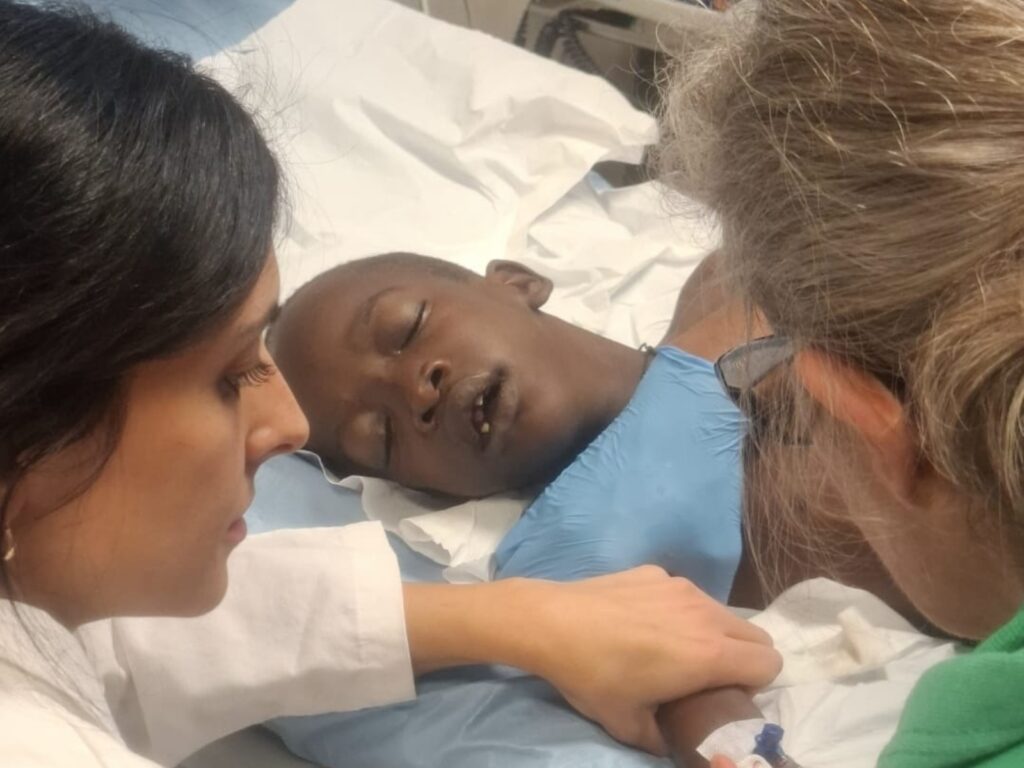
February 18
A fragile heart, an urgent surgery: Jeremiah needs us.
A fragile heart, an urgent surgery: Jeremiah needs us. Jeremiah is 11 years old and has lived with a congenital heart defect since birth—a condition that would have required surgery during his early years. Unfortunately, that window of opportunity was missed. Last week, we welcomed him at Linate Airport. It was a long-awaited moment, carefully planned. But when we met him, his condition immediately concerned us. It was no longer a time for waiting. It was time to act. Within a few hours, a decision critical to his life was made: an urgent transfer to Gaslini Hospital in Genoa. Jeremiah was urgently transferred to Gaslini Hospital, a national and international center of excellence for pediatric cardiology. There, he was immediately taken under care and admitted. The situation remains delicate, but as of today, Jeremiah is being cared for by an expert team that is monitoring every parameter with care and attention. In moments like these, it’s not just the diagnoses that matter. What matters is the speed of decision-making, the expertise of the professionals, and the ability to activate an effective care network. Pediatric Cardiology and Preoperative Evaluations In the coming days, Jeremiah will undergo all the necessary preoperative evaluations to determine the procedure and timing of the surgery. Each test helps to precisely define the clinical picture, reduce risks, and establish the safest possible treatment plan. POBIC will be by his side at every stage of this journey: during checkups, while waiting for surgery, and during the post-operative period. Being there doesn’t just mean organizing a medical trip. It means accompanying a child through one of the most vulnerable moments of his life. Solidarity and international healthcare cooperation: a story yet to be written Thanks to the support of those who believe in international healthcare cooperation, a child who, until just a few days ago, had no access to specialized care is now being treated at one of Europe’s leading pediatric centers. Every mission is more than just a medical procedure. It’s a bridge between countries, expertise, and people. Jeremiah is no longer alone. And this is the first, crucial step. THANKS TO YOUR SUPPORT, WE SAVE THE LIVES OF DOZENS OF CHILDREN EVERY YEAR. HELP US DO EVEN MORE. Countries 0 Children operated on 0 Children examined 0 +
READ MORE
October 19
On Mission to Accra: Towards a Research Protocol on Rheumatic Disease in Ghana
On a Mission to Accra: Toward a Research Protocol on Rheumatic Heart Disease in Ghana From September 14 to 18, 2025, Ada Caraffini, Director of Operations for the Pobic Association, took part in a mission to Ghana, along with cardiologist Davide Morolla. The goal of the trip was to begin work on developing a research protocol on the prevalence of rheumatic heart disease in children, with a specific focus on the 3- to 15-year-old age group, which is most affected by this condition. During the mission, Pobic collaborated with the Cardiothoracic Teaching Hospital in Accra—one of the country’s leading referral centers—alongside pediatric cardiologist Prof. Nana-Akyaa Tao and Dr. Innocenti Adzamil, professionals who have been dedicated for years to the diagnosis and treatment of pediatric cardiovascular diseases. Rheumatic Heart Disease: A Preventable but Still Widespread Condition Rheumatic heart disease is a chronic condition that develops following acute rheumatic fever, generally triggered by a Group A beta-hemolytic streptococcal infection (such as untreated pharyngitis or tonsillitis). If not treated promptly, the inflammation can cause permanent damage to the heart valves, leading to serious complications such as heart failure, arrhythmias, and the risk of premature death. This condition primarily affects children and adolescents in settings where access to timely medical care is limited. According to the World Health Organization, more than 39 million people worldwide live with rheumatic heart disease, with the greatest burden concentrated in low- and middle-income countries. Why Ghana, specifically? Ghana is among the African countries where rheumatic fever continues to have a significant impact on pediatric health.Numerous local studies confirm a high incidence among school-aged children, exacerbated by factors such as limited access to primary health care services, poor availability of timely antibiotic treatment, and socioeconomic and environmental conditions that contribute to the spread of untreated respiratory infections. In this context, the development of a targeted research protocol represents a fundamental first step toward collecting reliable data, understanding the true extent of the phenomenon, and designing evidence-based health interventions in the future. One Step at a Time The development of a protocol agreed upon with Ghanaian clinical and institutional partners will enable Pobic to: strengthen cooperation with the local healthcare system, contribute to the epidemiological understanding of a disease that is all too often neglected, and lay the groundwork for possible future developments, in line with the association’s international mission. As Ada Caraffini herself emphasized in her mission report, this is an important first step, but one that must be taken with care, attentiveness, and collaboration. Pobic will continue to document the progress of this project, sharing updates and reflections with its community and partners. Follow our social media channels so you don’t miss the latest updates from Ghana and our other missions around the world. THANKS TO YOUR SUPPORT, WE SAVE THE LIVES OF DOZENS OF CHILDREN EVERY YEAR. HELP US DO EVEN MORE. Countries 0 Children operated on 0 Children examined 0 +
READ MORE
July 14
Pobic at the “Ukraine Recovery” Conference in Rome: renewed commitment to Ukraine's reconstruction
Pobic at the “Ukraine Recovery” Conference in Rome: Renewed Commitment to Ukraine’s Reconstruction On July 10 and 11, 2025, the fourth edition of the Ukraine Recovery Conference (URC2025) took place in Rome, an international event organized by the governments of Italy and Ukraine to strengthen global cooperation in the reconstruction of Ukraine, which has been ravaged by more than three years of war. Held at the “La Nuvola” Rome Convention Center, the conference was attended by over 100 government delegations, 40 international organizations, and thousands of representatives from the economic and social sectors. The central objective: to transform declarations of support into concrete actions, with a particular focus on the country’s human, economic, and institutional resilience. The URC2025 program was structured around four strategic pillars: The URC2025 program was structured around four strategic pillars: Business: revitalizing the economy through private investment and support for local businesses. Human capital: addressing social needs, mental health, the reintegration of refugees, and the protection of minors. Local government and regions: strengthening the administrative capacity and autonomy of local authorities. European path: accelerating Ukraine’s integration into the European Union. Significant financial commitments were announced during the event. The European Union presented a support package worth 2.3 billion euros, with the goal of mobilizing up to 10 billion through guarantees, grants, and new financial instruments. Among the new initiatives is a European investment fund aimed at Ukraine’s industrial revitalization and green transition. Diplomacy, Security, and Global Engagement Numerous international leaders attended the opening session, including Ukrainian President Volodymyr Zelenskyy, European Commission President Ursula von der Leyen, Italian Prime Minister Giorgia Meloni, and other prominent political figures from the United Kingdom, Germany, the United States, and France. Among the topics discussed was the creation of a multinational force to stabilize the country once a ceasefire is reached, involving some thirty countries. Pobic’s Role: Concrete and Lasting Solidarity Pobic also took part in the conference, represented by its president, attorney Paolo Novellini; vice president Festus Adedayo; and chief operating officer Ada Caraffini. The NGO has been active in Ukraine for over twenty years, carrying out humanitarian projects ranging from healthcare support to assistance for vulnerable families, children, and rural communities affected by the war. Pobic’s participation in URC2025 reinforces its commitment to the Ukrainian people. The organization will continue to work in collaboration with local and international entities to provide tangible support in rebuilding the social and civil fabric. Its fieldwork will align with the conference’s objectives, promoting inclusive, sustainable, and human rights-based approaches. Pobic: Where the Need Is Greatest Today more than ever, Ukraine’s reconstruction cannot be merely a geopolitical issue: it is a collective responsibility, an act of solidarity toward millions of people who aspire to a dignified future. Pobic will be there, with expertise and compassion, every step of the way. THANKS TO YOUR SUPPORT, WE SAVE THE LIVES OF DOZENS OF CHILDREN EVERY YEAR. HELP US DO EVEN MORE. Countries 0 Children operated on 0 Children examined 0 +
READ MORE
July 9
Accra's National Cardiothoracic Centre unites against RHD in Ghana
Pobic and the National Cardiothoracic Center in Accra Join Forces Against RHD in Ghana Pobic NGO and the National Cardiothoracic Center in Accra (Ghana) signed a three-year international collaboration agreement on June 30 with the goal of combating rheumatic heart disease (RHD) among Ghanaian children. With an estimated 40 million cases worldwide and 300,000 deaths each year—primarily in low- and middle-income countries—RHD is a preventable but often neglected disease. The new partnership combines Pobic’s expertise in accessing and managing European and Italian funds with the clinical expertise of the Accra Center to create a replicable model for prevention, diagnosis, and treatment. What the agreement entails Epidemiological mapping: launching a study to assess the actual prevalence of RHD in Ghana’s most vulnerable areas. Widespread awareness-raising: distributing educational materials to schools, families, and communities to enable early recognition of streptococcal symptoms, the trigger for the disease. Enhancing diagnostics: providing throat swabs and other screening tools to local health centers, along with training for healthcare workers and technicians. Strengthening treatment: supporting the implementation of treatment protocols and an antibiotic prophylaxis program to halt the progression of the disease. Shared governance: establishing a task force and a joint Management Committee to coordinate operations, fundraising, and transparent reporting. We believe that only by working side by side with local communities and professionals can we eradicate a disease that, until recently, seemed an inevitable fate for far too many children,” Paolo Novellini, Esq., President of POBIC NGO Why It’s Important Early Intervention: Identifying and promptly treating streptococcal infections drastically reduces the risk of damage to heart valves, preventing long-term disability. Local Training and Capacity Building: Building local expertise means leaving behind sustainable “know-how” even after the agreement expires. Access to New Resources: With POBIC as the lead applicant, the project will be able to draw on European and Italian public and private funding, expanding its operational capacity in Ghana. This agreement reaffirms Pobic’s commitment to promoting health and dignity in the most underserved communities, thanks to collaboration with local institutions and the sharing of international best practices. THANKS TO YOUR SUPPORT, WE SAVE THE LIVES OF DOZENS OF CHILDREN EVERY YEAR. HELP US DO EVEN MORE. Countries 0 Children operated on 0 Children examined 0 +
READ MORE
July 3
Emergency Transport: Ukraine: silent escalation, evident emergency.
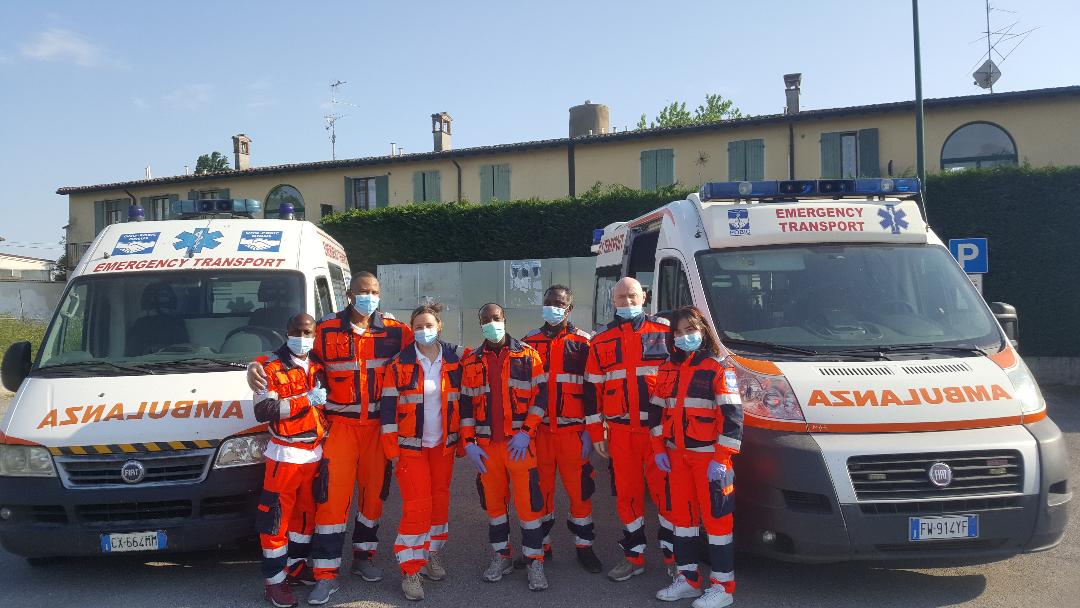
Emergency Transport: Why Now, More Than Ever, We Need to Support Pobic’s Emergency Transport People continue to die in Ukraine, even though the news no longer reports it. In recent days, Ukraine has been hit by the most massive wave of Russian attacks since the start of the conflict: between June 29 and July 3, hundreds of drones and missiles struck civilian infrastructure, hospitals, populated areas, and emergency response sites. In Odesa, Kryvyi Rih, Poltava, and the Kherson region, the raids have claimed civilian lives, including children. In Kyiv and Lviv, there have been power outages, casualties, and a healthcare system under strain. All of this is happening amid the silence of the European summer. And as the media frenzy subsides, the concrete need for stable, structured, and continuous aid grows. A war that is changing its face but remains cruel. The intensification of the bombings and Ukraine’s intention to withdraw from the Ottawa Convention—in order to resume the use of landmines—signal an escalating spiral of conflict: militarily, ethically, and humanitarily. Thousands of civilians risk being trapped in besieged territories. Evacuation routes are narrowing. And ambulances often become targets rather than instruments of salvation. Pobic’s Emergency Transport: a concrete, quiet, yet vital response. Since 2014, Pobic has been active in Ukraine with humanitarian interventions that have spanned all phases of the conflict, from the invasion of Crimea to the current crisis. We have done so consistently, never letting the engines of solidarity falter. Among the most urgent and indispensable projects today is Emergency Transport: a network of emergency medical transport for children, the wounded, the chronically ill, and vulnerable people. Coordinated by local and international volunteers, it operates in high-risk areas. It is essential for ensuring rapid evacuations, transport to hospitals that are still functioning, and targeted deliveries of medicines. In a context where ambulances are deliberately targeted and bombings are on the rise, securing equipped vehicles, fuel, personnel, and maintenance has become an act of human resistance. What can you do today? Today, more than ever, the escalation of the conflict demands immediate responses. Pobic is there. But we need your help to: Fund new mobile rescue units. Ensure driving shifts and transportation on increasingly dangerous routes. Strengthen the emergency logistics and healthcare network. EMERGENCY TRANSPORT Our strength lies in bringing hope on four wheels. Donate a “little piece” of an ambulance: together, we can get the next vehicle on the road before winter 2025. A dedicated campaign is live on the Pobic website; just €25 is enough to provide an on-board first-aid kit, and €100 to replenish the oxygen supply. Every contribution brings those fleeing closer to timely rescue. DONATE NOW
READ MORE
June 8
Morocco: The importance of the Berber language in education
Morocco: The Importance of the Berber Language in Education – The government’s plan to promote Amazigh in schools goes hand in hand with its recognition. As the number of students learning Amazigh—the official name of the Berber language—grows, Morocco is consolidating a process that began over twenty years ago to fully recognize the language as an integral part of the national identity. Today, 40% of public schools teach Amazigh, with over 650,000 students enrolled and nearly 2,000 teachers trained. The Ministry of Education aims to train 3,000 teachers within the next few years, with the goal of expanding instruction to all schools across the country. A Commitment with a Solid Foundation The increase in the number of dedicated teachers—from 200 in 2021 to 1,850 in 2024—is the result of an institutional commitment that has a solid legal foundation. Article 5 of the 2011 Constitution recognizes Amazigh as an official language of the state, defining it as “the common heritage of all Moroccans without exception.” This decision reflects not only a cultural vision but also a social need: in Berber communities, speaking one’s own language at school means having access to a more equitable education and to basic services that are truly understandable. And the importance is not limited to the language. The importance of the language is also reflected in the healthcare sector. In many inland areas of the country, where a lack of medical facilities and information particularly disadvantages women, the use of Amazigh can make a difference in understanding preventive health messages. It was from this awareness that Pobic’s commitment took shape, with a project specifically aimed at Berber women. Activities have included awareness-raising sessions on women’s health, education on the prevention of communicable and chronic diseases, and promotion of access to basic checkups and prenatal care. Intervening in these contexts is not just a health issue: it means strengthening women’s roles in the community and contributing—through active listening and language—to structural and lasting change. Find out how you can help Pobic in its mission.
READ MORE
May 19
Uganda and the long shadow of Ebola: what makes it difficult to eradicate?
Uganda and the Long Shadow of Ebola: What Makes It So Hard to Eradicate? In the heart of East Africa, the virus continues to pose a latent threat. Despite successes in containing the outbreak, the country’s structural and health system vulnerabilities remain significant. In late April 2025, the Ugandan Ministry of Health announced the end of the latest Ebola outbreak. This milestone was reached after 42 days without new infections, as certified by the World Health Organization. But behind the optimism lies a complex reality: that of a country forced to live with an invisible enemy that resurfaces cyclically, in ways that are always unpredictable. Recent Reports on Ebola in Uganda The most recent outbreak, which erupted in Kampala—a metropolis of four million people and a key hub for East Africa—affected 14 people: 12 confirmed cases and 2 probable cases. Four have died, and ten have recovered. Patient zero was a nurse who died shortly after contracting the disease, as reported by Al Jazeera’s website. The strain responsible is the Sudan virus, for which there is still no approved vaccine. In the absence of established treatments, protocols rely on isolation, contact tracing, and community-based surveillance. How many deaths? The 2025 outbreak was the ninth in the country since 2000. The country’s proximity to the Democratic Republic of the Congo—where an outbreak between 2018 and 2020 claimed over 2,200 lives—increases its exposure to risk. The tropical forests along the border are home to animal species considered natural reservoirs of the virus. But it is the socio-health conditions that make Ebola endemic: poor hygiene, hospitals with minimal equipment, and deep mistrust of vaccination campaigns hinder any structural efforts. What are the solutions to combat Ebola in Uganda? In response, clinical trials for a vaccine specifically targeting the Sudan virus are underway at the Mulago National Referral Hospital in Kampala. Health authorities are relying on the experience gained from over twenty years of epidemics to contain outbreaks. Unfortunately, according to experts, without a lasting strengthening of the hospital network in rural areas and a cultural shift in the perception of infectious diseases, the risk of new infections remains high. Pobic’s Fundamental Contribution It is precisely in these neglected areas that parallel interventions—spanning healthcare, development cooperation, and human rights—are taking place. A concrete example is the work we at Pobic have been carrying out for years in the western Rwenzori region. As early as 2016, we launched the Pobic for Women program, in collaboration with the Rena Foundation, to assist pregnant women lacking access to safe care. The year 2024 marked a significant milestone: the Open Heart Uganda mission enabled three children with severe heart conditions to be transferred to Italy to receive life-saving treatment. They are the first of 59 children who underwent screening. A humanitarian bridge between two worlds, made possible not only by solidarity but by a vision focused on systemic vulnerabilities that Ebola, time and again, continues to reveal. Find out how you can help Pobic in its mission in Uganda.
READ MORE
May 5
Emergency Transport: Why a Pobic Ambulance Can Make the Difference in the Ukrainian Refugee Crisis
Emergency Transport: Why a Pobic Ambulance Can Make a Difference in the Ukrainian Displacement Crisis For three years, Ukraine has been experiencing forced displacement: nearly 5 million people are moving within the country to escape the bombings, only to try to return home when the front line retreats. Added to this are 6.36 million registered refugees in Europe—4.3 million of whom are under temporary protection in the EU—who are straining already saturated reception systems in Poland and Germany. The ’Commuting“ of Internally Displaced Persons According to the IOM, 37 % of the displaced report having changed provinces more than once in the past year; many move back and forth between the western regions, considered safer, and their provinces of origin to check on their homes or work. This logistical instability makes mobile relief resources essential to reach communities whose composition changes from month to month. Funding Gaps The UN humanitarian plan for 2025 calls for $2.6 billion, but to date it covers only 20 % of the needs: U.S. cuts have caused funding to plummet by 83 % compared to 2024. As a result, the target number of people to be assisted has dropped from 6 to 4.8 million, leaving out millions of displaced people in hard-to-reach areas. The Strain of Hosting in Europe—Poland: nearly 1 million PESEL-UKR records are still active, with emergency shelters beginning to close due to a lack of funding. Germany: 1.25 million Ukrainian refugees—including 29 % minors—are putting pressure on local schools and health services. As social safety nets fray, the demand for medical transfers from border to border and to the most capable hospital hubs is growing. Pobic’s Vital Contribution Through the Emergency Transport program, Pobic retrieves decommissioned ambulances in Italy, refurbishes them, and sends them loaded with medical supplies. A Symbolic Case — Nemirov, 2023 When a missile fragment destroyed the town’s only emergency vehicle, Pobic delivered a new ambulance, driven to the Donbas by the president of Pobic-Ukraine, Mikola Segeda. Traveling alongside the vehicle were first-aid kits, antibiotics, blankets, and warm clothing assembled by volunteers in Lombardy. Read the article here to learn more about the story. Every Pobic convoy departs with: Medications for surgical and emergency use (pain relievers, antibiotics, saline solution). First-aid kits for the rapid evacuation of injured civilians. Thermal blankets and winter clothing for those living in makeshift shelters or unheated basements. Clothing, non-perishable food, and toys for children. Our Goals for 2025 Expand the fleet: the minimum goal is to donate three more ambulances to the municipalities of Kharkiv, Zaporizhzhia, and Mykolaïv, where vehicles are most frequently targeted. Train local staff: 48-hour modules on triage and in-ambulance emergency care for Ukrainian nurses. Long-distance support: continue the program launched in 2010 at the Nemirov orphanage, ensuring monthly supplies of clothing and educational toys. Why Every Ambulance Counts Right Now Addressing displacement: A fully equipped vehicle can follow displaced people as they move, providing care where hospitals are no longer accessible. It fills budget gaps: as UN funds dwindle, a fully stocked ambulance is worth an average of €85,000, covering a gap that international agencies can no longer finance. It relieves the burden on host countries: reducing untreated injuries at the border means fewer costly hospitalizations in Berlin or Warsaw. EMERGENCY TRANSPORT Our strength lies in bringing hope on four wheels. Donate a ”little piece” of an ambulance: together we can get the next vehicle on the road before winter 2025. A dedicated campaign is live on the Pobic website; just €25 is enough to provide a first-aid kit on board, and €100 to restock the oxygen supply. Every contribution brings those fleeing closer to timely medical assistance. DONATE NOW
READ MOREOPERATING HEADQUARTERS
- Registered office / operational office Via Romanino 1 25123 Brescia
- +39 0376920464
- ong-pobic@ong-pobic.org
CONTACTS
Registered/Operational office
Via Romanino 1
25123 Brescia
Tel - +39 0376-920464
Headquarters
V. Belfiore No. 9
Bozzolo (MN)
Operations Headquarters
Via Santa Maria in Conio, 10
35131 Padua PD
SUBSCRIBE TO THE NEWSLETTER
But let there be a nest in the velvet viverra bibendum in ac nisi. Even let the dui vitae sem
GALLERY




- ONG POBIC ODV