



Category Ukraine
August 10
Ukraine, the Acqua Viva project reaches the communities of Kharkiv: 1,089 personal hygiene kits distributed
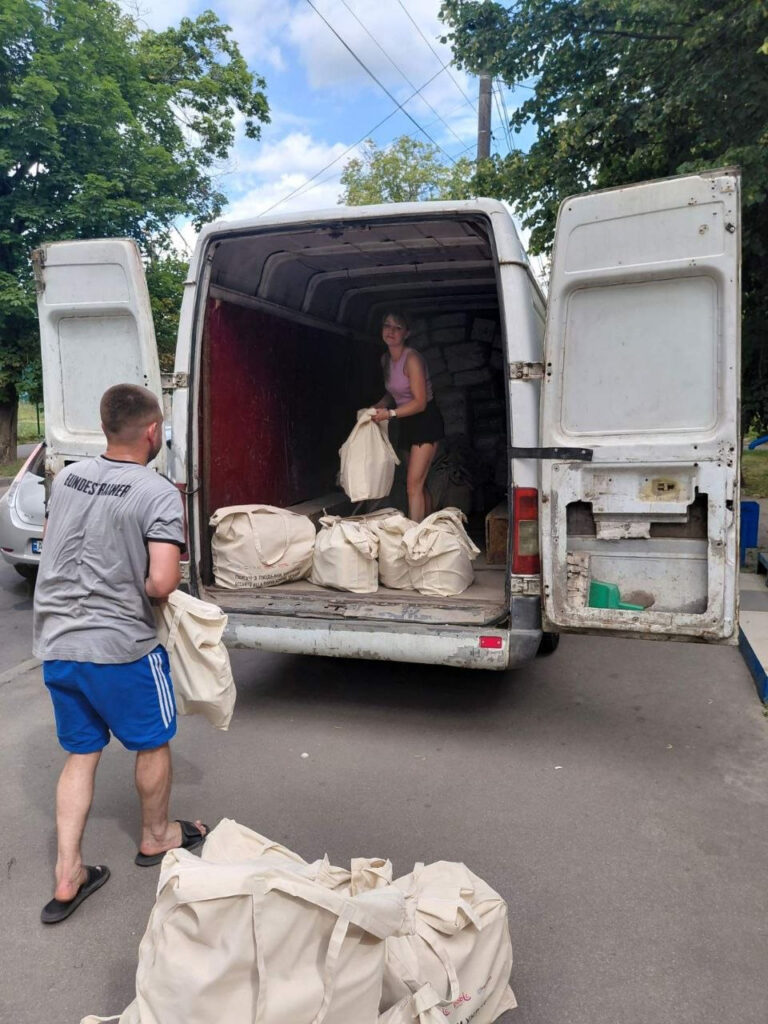
Ukraine: The Acqua Viva Project Reaches Communities in Kharkiv. As of June 30, four out of ten kits had been prioritized for people in particularly vulnerable situations and in need, including people with disabilities and the elderly. When a war drags on, international attention risks waning before the needs of the population are met. For those living in the Kharkiv region, however, the emergency is not just a distant news story. It continues to affect daily life, access to essential goods, and the ability to care for oneself with dignity. It is in this context that the Acqua Viva 04/UCr/13157/2026 project continues, funded by AICS Kiev and implemented with the direct participation of the NGO POBIC. As of June 30, 1,089 personal hygiene kits had been distributed to communities in the Kharkiv region. This tangible result marks the transition from the availability of aid to its actual distribution throughout the region. From 15 metric tons of supplies to distribution in communities In the previous update on the Acqua Viva project, POBIC reported the arrival in Kharkiv of approximately 15 metric tons of personal hygiene products. The latest data documents the next phase of the intervention: the received supplies were organized into kits and progressively distributed to the target communities. This is not merely a matter of quantifying the aid delivered. Each distribution represents a response to a daily need that, in a situation of war and displacement, can become difficult to meet. Four out of ten kits went to the most vulnerable people. 40% of the distributed kits were prioritized for people in particularly vulnerable situations and in need, including people with disabilities and the elderly. Allocation was based on an assessment of specific needs, so as to direct support toward those who may face greater difficulties in independently accessing essential goods. This is a key element of the project: not an indiscriminate distribution, but an intervention that takes into account the circumstances of individual people and the inequalities that war tends to exacerbate. For an older adult or a person with a disability, in fact, the disruption of services, the loss of support networks, and difficulties with mobility can make it even more challenging to obtain even the items needed for daily care. Behind every number is a person. Help POBIC continue to stand by the Ukrainian people. PEOPLE REACHED 0 M PERSONAL HYGIENE KITS 0 KITS DISTRIBUTED 0 % Personal hygiene is a matter of health and dignity. In a humanitarian emergency, personal hygiene products may seem less urgent than other forms of aid. In reality, they help protect health, prevent health problems, and preserve people’s dignity. Being able to wash and care for one’s body means maintaining an essential part of one’s daily life, even when war has disrupted routines, relationships, and certainties. The value of the Acqua Viva project also lies in this: recognizing that humanitarian assistance is not just about survival, but also about the right to live in conditions that are as safe and dignified as possible. Essential Aid in an Ongoing Crisis More than four years after the start of the large-scale invasion, the humanitarian crisis in Ukraine remains extremely severe. According to the United Nations Humanitarian Response Plan for 2026, approximately 10.8 million people in the country still need humanitarian assistance. In this context, the distribution of 1,089 kits represents a limited but necessary intervention. It demonstrates how collaboration between humanitarian organizations, on-the-ground workers, and institutions can transform resources and materials into effective support for communities. A kit cannot restore what the war has taken away. However, it can help protect a part of a person’s daily life, health, and dignity. And it is also through concrete actions like this that POBIC continues to stand by the Ukrainian people. The photographs accompanying this update are simple, unstaged, and far removed from the aesthetics typically associated with fundraising campaigns. Their value, however, lies precisely in their authenticity. Security conditions did not allow POBIC staff to travel to the areas affected by the distribution. Access was not authorized because it would have required extraordinary protective measures and procedures in a part of the Kharkiv region that has been subjected to systematic bombardment since April.
READ MORE
July 14
Pobic at the “Ukraine Recovery” Conference in Rome: renewed commitment to Ukraine's reconstruction
Pobic at the “Ukraine Recovery” Conference in Rome: Renewed Commitment to Ukraine’s Reconstruction On July 10 and 11, 2025, the fourth edition of the Ukraine Recovery Conference (URC2025) took place in Rome, an international event organized by the governments of Italy and Ukraine to strengthen global cooperation in the reconstruction of Ukraine, which has been ravaged by more than three years of war. Held at the “La Nuvola” Rome Convention Center, the conference was attended by over 100 government delegations, 40 international organizations, and thousands of representatives from the economic and social sectors. The central objective: to transform declarations of support into concrete actions, with a particular focus on the country’s human, economic, and institutional resilience. The URC2025 program was structured around four strategic pillars: The URC2025 program was structured around four strategic pillars: Business: revitalizing the economy through private investment and support for local businesses. Human capital: addressing social needs, mental health, the reintegration of refugees, and the protection of minors. Local government and regions: strengthening the administrative capacity and autonomy of local authorities. European path: accelerating Ukraine’s integration into the European Union. Significant financial commitments were announced during the event. The European Union presented a support package worth 2.3 billion euros, with the goal of mobilizing up to 10 billion through guarantees, grants, and new financial instruments. Among the new initiatives is a European investment fund aimed at Ukraine’s industrial revitalization and green transition. Diplomacy, Security, and Global Engagement Numerous international leaders attended the opening session, including Ukrainian President Volodymyr Zelenskyy, European Commission President Ursula von der Leyen, Italian Prime Minister Giorgia Meloni, and other prominent political figures from the United Kingdom, Germany, the United States, and France. Among the topics discussed was the creation of a multinational force to stabilize the country once a ceasefire is reached, involving some thirty countries. Pobic’s Role: Concrete and Lasting Solidarity Pobic also took part in the conference, represented by its president, attorney Paolo Novellini; vice president Festus Adedayo; and chief operating officer Ada Caraffini. The NGO has been active in Ukraine for over twenty years, carrying out humanitarian projects ranging from healthcare support to assistance for vulnerable families, children, and rural communities affected by the war. Pobic’s participation in URC2025 reinforces its commitment to the Ukrainian people. The organization will continue to work in collaboration with local and international entities to provide tangible support in rebuilding the social and civil fabric. Its fieldwork will align with the conference’s objectives, promoting inclusive, sustainable, and human rights-based approaches. Pobic: Where the Need Is Greatest Today more than ever, Ukraine’s reconstruction cannot be merely a geopolitical issue: it is a collective responsibility, an act of solidarity toward millions of people who aspire to a dignified future. Pobic will be there, with expertise and compassion, every step of the way. THANKS TO YOUR SUPPORT, WE SAVE THE LIVES OF DOZENS OF CHILDREN EVERY YEAR. HELP US DO EVEN MORE. Countries 0 Children operated on 0 Children examined 0 +
READ MORE
July 3
Emergency Transport: Ukraine: silent escalation, evident emergency.
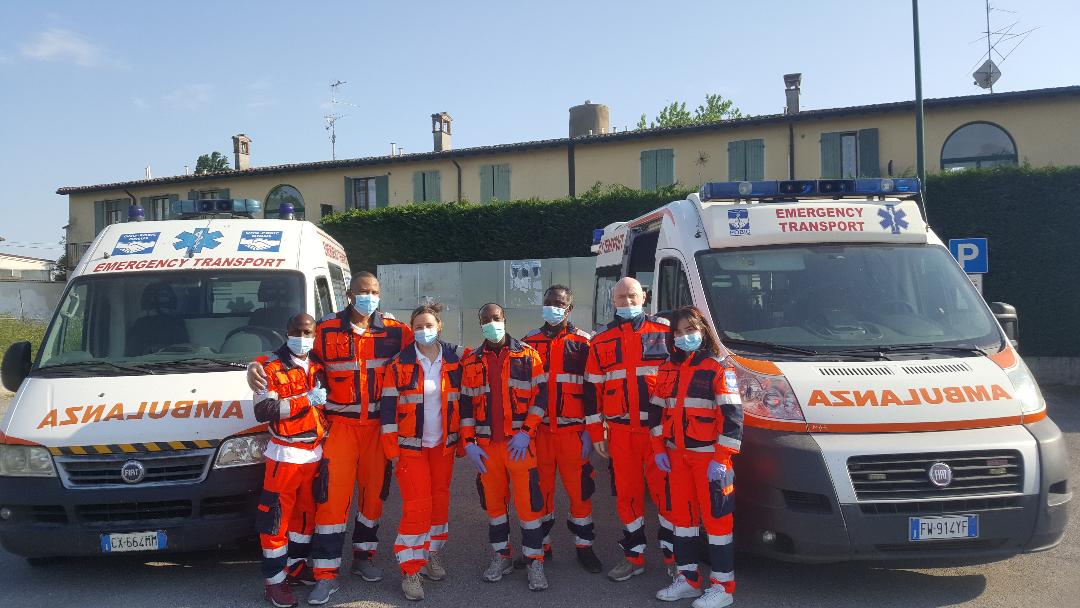
Emergency Transport: Why Now, More Than Ever, We Need to Support Pobic’s Emergency Transport People continue to die in Ukraine, even though the news no longer reports it. In recent days, Ukraine has been hit by the most massive wave of Russian attacks since the start of the conflict: between June 29 and July 3, hundreds of drones and missiles struck civilian infrastructure, hospitals, populated areas, and emergency response sites. In Odesa, Kryvyi Rih, Poltava, and the Kherson region, the raids have claimed civilian lives, including children. In Kyiv and Lviv, there have been power outages, casualties, and a healthcare system under strain. All of this is happening amid the silence of the European summer. And as the media frenzy subsides, the concrete need for stable, structured, and continuous aid grows. A war that is changing its face but remains cruel. The intensification of the bombings and Ukraine’s intention to withdraw from the Ottawa Convention—in order to resume the use of landmines—signal an escalating spiral of conflict: militarily, ethically, and humanitarily. Thousands of civilians risk being trapped in besieged territories. Evacuation routes are narrowing. And ambulances often become targets rather than instruments of salvation. Pobic’s Emergency Transport: a concrete, quiet, yet vital response. Since 2014, Pobic has been active in Ukraine with humanitarian interventions that have spanned all phases of the conflict, from the invasion of Crimea to the current crisis. We have done so consistently, never letting the engines of solidarity falter. Among the most urgent and indispensable projects today is Emergency Transport: a network of emergency medical transport for children, the wounded, the chronically ill, and vulnerable people. Coordinated by local and international volunteers, it operates in high-risk areas. It is essential for ensuring rapid evacuations, transport to hospitals that are still functioning, and targeted deliveries of medicines. In a context where ambulances are deliberately targeted and bombings are on the rise, securing equipped vehicles, fuel, personnel, and maintenance has become an act of human resistance. What can you do today? Today, more than ever, the escalation of the conflict demands immediate responses. Pobic is there. But we need your help to: Fund new mobile rescue units. Ensure driving shifts and transportation on increasingly dangerous routes. Strengthen the emergency logistics and healthcare network. EMERGENCY TRANSPORT Our strength lies in bringing hope on four wheels. Donate a “little piece” of an ambulance: together, we can get the next vehicle on the road before winter 2025. A dedicated campaign is live on the Pobic website; just €25 is enough to provide an on-board first-aid kit, and €100 to replenish the oxygen supply. Every contribution brings those fleeing closer to timely rescue. DONATE NOW
READ MORE
May 5
Emergency Transport: Why a Pobic Ambulance Can Make the Difference in the Ukrainian Refugee Crisis
Emergency Transport: Why a Pobic Ambulance Can Make a Difference in the Ukrainian Displacement Crisis For three years, Ukraine has been experiencing forced displacement: nearly 5 million people are moving within the country to escape the bombings, only to try to return home when the front line retreats. Added to this are 6.36 million registered refugees in Europe—4.3 million of whom are under temporary protection in the EU—who are straining already saturated reception systems in Poland and Germany. The ’Commuting“ of Internally Displaced Persons According to the IOM, 37 % of the displaced report having changed provinces more than once in the past year; many move back and forth between the western regions, considered safer, and their provinces of origin to check on their homes or work. This logistical instability makes mobile relief resources essential to reach communities whose composition changes from month to month. Funding Gaps The UN humanitarian plan for 2025 calls for $2.6 billion, but to date it covers only 20 % of the needs: U.S. cuts have caused funding to plummet by 83 % compared to 2024. As a result, the target number of people to be assisted has dropped from 6 to 4.8 million, leaving out millions of displaced people in hard-to-reach areas. The Strain of Hosting in Europe—Poland: nearly 1 million PESEL-UKR records are still active, with emergency shelters beginning to close due to a lack of funding. Germany: 1.25 million Ukrainian refugees—including 29 % minors—are putting pressure on local schools and health services. As social safety nets fray, the demand for medical transfers from border to border and to the most capable hospital hubs is growing. Pobic’s Vital Contribution Through the Emergency Transport program, Pobic retrieves decommissioned ambulances in Italy, refurbishes them, and sends them loaded with medical supplies. A Symbolic Case — Nemirov, 2023 When a missile fragment destroyed the town’s only emergency vehicle, Pobic delivered a new ambulance, driven to the Donbas by the president of Pobic-Ukraine, Mikola Segeda. Traveling alongside the vehicle were first-aid kits, antibiotics, blankets, and warm clothing assembled by volunteers in Lombardy. Read the article here to learn more about the story. Every Pobic convoy departs with: Medications for surgical and emergency use (pain relievers, antibiotics, saline solution). First-aid kits for the rapid evacuation of injured civilians. Thermal blankets and winter clothing for those living in makeshift shelters or unheated basements. Clothing, non-perishable food, and toys for children. Our Goals for 2025 Expand the fleet: the minimum goal is to donate three more ambulances to the municipalities of Kharkiv, Zaporizhzhia, and Mykolaïv, where vehicles are most frequently targeted. Train local staff: 48-hour modules on triage and in-ambulance emergency care for Ukrainian nurses. Long-distance support: continue the program launched in 2010 at the Nemirov orphanage, ensuring monthly supplies of clothing and educational toys. Why Every Ambulance Counts Right Now Addressing displacement: A fully equipped vehicle can follow displaced people as they move, providing care where hospitals are no longer accessible. It fills budget gaps: as UN funds dwindle, a fully stocked ambulance is worth an average of €85,000, covering a gap that international agencies can no longer finance. It relieves the burden on host countries: reducing untreated injuries at the border means fewer costly hospitalizations in Berlin or Warsaw. EMERGENCY TRANSPORT Our strength lies in bringing hope on four wheels. Donate a ”little piece” of an ambulance: together we can get the next vehicle on the road before winter 2025. A dedicated campaign is live on the Pobic website; just €25 is enough to provide a first-aid kit on board, and €100 to restock the oxygen supply. Every contribution brings those fleeing closer to timely medical assistance. DONATE NOW
READ MORE
April 27
Russia-Ukraine War: A conflict we are forgetting (but more dramatic than ever)
The Russia-Ukraine War: A Conflict We’re Forgetting (But One That’s More Dramatic Than Ever) The Ukraine-Russia War. What’s happening? Where did it all start? What can we do? These are just a few of the questions we ask ourselves regarding one of the most talked-about armed conflicts in recent years. In this article, we’ll answer them by giving you a glimpse into the current situation. Read it all the way through if you’d like to have your say on the matter. THANKS TO YOUR SUPPORT, WE SAVE THE LIVES OF DOZENS OF CHILDREN EVERY YEAR. HELP US DO EVEN MORE. Countries 0 Children operated on 0 Children examined 0 + What’s happening between Russia and Ukraine? Starting on Thursday, February 24, 2022, Russia launched a full-scale invasion of Ukraine, carrying out airstrikes, missile attacks, and ground assaults on several Ukrainian cities. This invasion is the latest escalation in an ongoing crisis between Russia and Ukraine that has been unfolding for years. HELP US DO EVEN MORE Every donation is essential to us. YOU CAN CONTRIBUTE, TOO Donbas: The Focus of the Russian Offensive Russian forces are concentrating their efforts in the Donbas, with the goal of capturing the entire Donetsk and Luhansk regions, which are controlled by pro-Russian separatists. Clashes are intensifying around the cities of Sloviansk, Kramatorsk, and Severodonetsk, where heavy shelling and close-quarters combat are taking place. The Russian advance is slow and arduous, facing strong resistance from Ukrainian troops, who are using their knowledge of the terrain to their advantage. Russia’s use of heavy artillery and missiles is causing extensive damage to cities and civilian infrastructure, resulting in numerous civilian casualties. Toward the South: Ukrainian Counteroffensive in Kherson In the south of the country, Ukrainian forces have launched a counteroffensive in the Kherson region, managing to recapture several cities previously occupied by the Russians. Fighting is concentrated in the city of Kherson, the regional capital, which remains under Russian control. The Ukrainian counteroffensive is aided by Western arms supplies, including Javelin and Stinger missiles, which allow for precision strikes against Russian tanks and other armored vehicles. The recapture of Kherson would represent a significant symbolic victory for Ukraine and could weaken Russia’s position in the south of the country. Bombings Across the Country Although attention is focused on the Donbas, Russia continues to bomb Ukrainian cities across the country, even those far from the conflict zones. These attacks indiscriminately target residential areas, schools, hospitals, and other civilian infrastructure, causing a civilian bloodbath and a severe humanitarian crisis. The hardest-hit cities include Kharkiv, Ukraine’s second-largest city; Mariupol, which has been almost completely razed; and Odessa, a major port on the Black Sea. Casualties and the Humanitarian Crisis The war in Ukraine has caused a dramatic humanitarian crisis, with millions of people displaced from their homes and thousands killed. According to UN estimates, over 12 million people have fled their homes in Ukraine, of whom about 5 million have become refugees in neighboring countries. The United Nations estimates that the number of civilian deaths is at least 6,000, but the actual figure could be much higher. The humanitarian situation in besieged cities such as Mariupol is particularly critical, with shortages of food, water, medicine, and medical care. A desperate situation: what we at POBIC are doing In the face of this dramatic situation, every effort is essential. Just consider that a city seemingly outside the conflict, such as Nemirov, has seen its social fabric devastated over the past year. The three ambulances available in this town of about 15,000 residents have been completely destroyed. The Bombed Ambulance This is what remains of the only ambulance in the city of Nemirov, Ukraine. A fragment of a Russian missile, partially destroyed by Ukrainian forces, fatally struck the emergency response vehicle. For a community like Nemirov, this is a very serious social tragedy. That is why, as Pobic, we have donated—on an emergency basis—an ambulance that had been decommissioned in Italy but remains fully operational. Professor Mikola Segeda, president of the Pobic Ukraine Foundation, has taken it upon himself to drive the vehicle to its destination. This is just the first step. The donated ambulance: Professor Mikola Segeda and Dr. Festus Adebayo, president of Pobic Nigeria-Ukraine: Pobic’s next step. If you’ve been following us for some time, you know of our deep connection with the Ukrainian people. Despite what you may hear on TV or social media, the situation is more dire than ever. The Pobic shelter set up in the Nemirov area is proving to be completely insufficient for the enormous number of displaced people who—having left their homes—are seeking safety by fleeing. We’re developing a plan to truly help during this crisis, which is shattering lives and turning a nation like Ukraine into a people without homes. A first step will be providing practical aid. We have purchased an additional ambulance to send to Ukraine, which will follow the one we had already sent a few months ago. The situation is terrible for our Ukrainian brothers and sisters. We are preparing something very important and will tell you about it soon. New ambulance donated by Pobic volunteers alongside attorney Paolo Novellini, president of Pobic, Mikola Segeda, and Giancarlo Nolli, head of the cooperatives. War between Ukraine and Russia: Future Prospects The outcome of the conflict remains uncertain. Russia has military superiority in terms of manpower and weaponry, but Ukraine has demonstrated strong resistance and determination to defend its country. The course of the war could depend on several factors, including the continued flow of Western weapons to Ukraine, changes in troop morale on both sides, and the possible escalation of the conflict into a broader war between Russia and NATO. Diplomats continue to seek a peaceful solution to the crisis, but no significant progress has been made so far. What really matters, however, is that we must and want to contribute
READ MORE
April 26
Ukraine: all our history from the beginning to the present
Ukraine: Our Entire History from the Beginning to Today Our mission in Ukraine did not begin with the outbreak of war, nor was it a response to a sudden emergency. It is a story with deep roots, made up of encounters, small steps, and relationships built over the years. A story we want to share with you, from the beginning to today. 2005: The First Steps in Krasnograd It was 2005 when Pobic crossed the Ukrainian border for the first time. The destination was Krasnograd, a small town in the Kharkiv Oblast, in eastern Ukraine. In a context marked by poverty and hardship, we found vibrant, dignified communities eager to build a better future. Our first initiative was simple yet essential: direct support for families in need, with a special focus on those with children with disabilities. We didn’t have extensive resources, but we were fully committed to being there, to accompanying these families with concrete and ongoing support. SPONSORSHIP PROGRAM 2008: Training for Resilience in Lviv In 2008, we realized that helping also meant building skills. So, in collaboration with Yosypovych University in Lviv, we organized courses in nursing care and the management of major trauma. During a time when the country was still relatively stable, investing in the training of healthcare personnel meant strengthening a fragile yet vital network capable of responding to both routine and extraordinary emergencies. 2005–2025: Our Long-Standing Friendship with Nemirov At the same time, back in 2005, one of our most enduring projects was taking shape: our support for the Nekrasov Orphanage in Nemirov, in the Vinnytsia Oblast. Year after year, we brought basic necessities, educational materials, and toys to the children living at the facility. But that’s not all. We also organize summer programs for children with dermatological and musculoskeletal conditions, offering them therapeutic and wellness stays in Italy with supportive host families. The Nemirov mission, still active today, is the most vivid testament to our constant and quiet commitment. Since 2022: War in Ukraine, a New Emergency When war broke out in Ukraine in 2022, everything changed. The Ukrainian crisis erupted with devastating force, and with it, the population’s needs. We did not shy away: we organized humanitarian convoys, distributing medications, clothing, food, and emergency supplies to displaced populations. We expanded our presence, striving to offer not only material support but also human support. 2023: An Ambulance to Save Lives In 2023, a dramatic incident required an immediate response from us. In Nemirov, the only available ambulance was destroyed by a fragment of a Russian missile. In response, we donated a new, fully functional ambulance from Italy, which restored hope to an entire community. We also loaded the ambulance with clothing and medicines, which were delivered thanks to the determination of the president of Pobic Ukraine, Mikola Segeda. 2024: Strengthening Healthcare, Building the Future In 2024, our efforts were further strengthened: we donated a second ambulance to the Vinnytsia Oblast and launched specialized healthcare training programs for managing emergencies in a wartime context. This was a crucial step toward ensuring not only resources but also expertise, so that those living on the front lines of the conflict can count on adequate support. Today: The Mission Continues Twenty years since the start of our mission in Ukraine, we know that every effort has built something: a network of solidarity, tangible support, and a future that is possible even in the darkest moments. With your help, we can keep going. Every donation directly supports our projects: ambulances, medicines, training, and basic necessities. Donate now and walk with us alongside those who cannot stop hoping. THANKS TO YOUR SUPPORT, WE SAVE THE LIVES OF DOZENS OF CHILDREN EVERY YEAR. HELP US DO EVEN MORE. Countries 0 Children operated on 0 Children examined 0 +
READ MORE
Apr 12
2005 – Mission to Ukraine in Krasnograd: where it all began
2005 – Mission to Krasnograd, Ukraine: Where It All Began Our first step in Ukraine was gentle, almost timid. It was 2005, and the city was called Krasnograd, a small town in the Kharkiv Oblast, not far from the eastern border. We didn’t know exactly what to expect, but one thing was clear: we wanted to be there. Not to impose solutions from above, but to walk alongside the people. Back then, we were still called Anpobic, and we were at the beginning of a journey we never imagined would be so long and intense. Krasnograd welcomed us with its rugged beauty: low-lying houses, dusty streets, a silence that spoke volumes. And in the faces of the people—marked by work, by hardship, but also by an almost disarming kindness—we immediately saw a truth: there was need here, but also dignity. A tangible poverty, unvarnished, yet never beggarly. A commitment made of outstretched hands, not promises. There was no need for grand initial plans. We brought clothes, shoes, and blankets; we listened to stories; we sat at the table with those who had nothing to offer but hot tea and the desire to share their stories. From there, almost naturally, the Long-Distance Support project was born: a tool that allowed us to help families with disabled children, to build a direct connection between those who gave and those who received, without filters. The mission in Krasnograd, Ukraine, took shape one step at a time. It wasn’t a program—it was a relationship. At a time when everything seemed at a standstill, that small exchange of help and humanity set things in motion. A gesture of kindness that went back and forth. SPONSOR A CHILD 2025: The War in Ukraine and Faithfulness to Our Mission Then, in 2022, the sound of war reached even those quiet places. And today, in 2025, Krasnograd has become a sore spot on the map of suffering. The war in Ukraine has changed the face of everything, but not our bond with those people. The voices reaching us speak of fear, hunger, and cold. And we are still there—not with definitive solutions, but with the same steadfast presence as always. Because the mission in Ukraine, at least for us, is first and foremost a promise of loyalty. THANKS TO YOUR SUPPORT, WE SAVE THE LIVES OF DOZENS OF CHILDREN EVERY YEAR. HELP US DO EVEN MORE. Countries 0 Children operated on 0 Children examined 0 +
READ MORE
Apr 12
2023 – Mission to Ukraine in Nemirov: an ambulance to start again
2023 – Mission to Nemirov, Ukraine: An Ambulance to Get Back on Track There was only one ambulance left for the entire city of Nemirov, Ukraine. Then, one day in 2023, even that was gone. A fragment of a Russian missile—partially intercepted, but not quite enough—struck the only available emergency vehicle head-on. A silent tragedy, one that might have gone unnoticed elsewhere, but which for a small community like Nemirov meant losing its last chance for emergency transport—the only means of saving lives. A blow to the heart, in the midst of a war in Ukraine that is eroding the country’s social and healthcare fabric day by day. When Concrete Answers Are Needed We didn’t need to think about it for long. As Pobic, having been involved in numerous missions in Ukraine for years, we knew what to do. Good intentions weren’t enough; an ambulance was needed. Immediately. So we decided, as an emergency measure, to donate a vehicle decommissioned in Italy—no longer used for local emergency response but still in perfect working order. And so a new mission to Ukraine began: discreet, practical, filled with humanity and essential equipment. SPONSOR A CHILD From Afar: So Much More Inside That Ambulance That ambulance, driven by Pobic Ukraine President Mikola Segeda, carried more than just a technical solution. We wanted it to be a tangible sign that someone, from afar, is listening and responding. On board were clothes, medicines, and basic necessities, collected thanks to the generosity of those who, even from afar, have not forgotten the Ukrainian people. Everything was loaded by hand, piece by piece, as one does with the things that truly matter. Beyond the Emergency, Continuity The mission in Nemirov, Ukraine, does not end with a single delivery. It is part of a commitment that has been with us for years—one made up of quiet interventions, small logistical miracles, and relationships built on the ground. The crisis in Ukraine has shown just how fragile even the most basic infrastructure can be. But it has also shown how resilient a proud community can be, if supported. THANKS TO YOUR SUPPORT, WE SAVE THE LIVES OF DOZENS OF CHILDREN EVERY YEAR. HELP US DO EVEN MORE. Countries 0 Children operated on 0 Children examined 0 +
READ MORE
Apr 12
2010 – Mission in Ukraine to Nekrasov: a commitment that continues over time
2010 – Mission in Ukraine in Nekrasov: A Commitment That Endures Over Time The war in Ukraine has drawn the world’s attention in recent years, but for us at Pobic, our commitment to this country began long before that. Among the many missions we’ve carried out in Ukraine, one of the first and most meaningful was the one that began in 2010 in Nemirov, at the Nikolai Alekseevich Nekrasov Orphanage. The Beginnings of the Mission in Nekrasov In 2010, we arrived in Nemirov driven by a desire to learn about a fragile yet significant reality. Although the Nekrasov Orphanage showed its age, it immediately struck us as a dignified facility, managed with care. We were welcomed by the director, Kondratuk Vasil Yakovic, who listened to our plans with kindness and openness. From that first meeting, the Long-Distance Sponsorship project was born, designed to help orphaned children living in public facilities. Tangible Support Thanks to the support of our members and donors, we were able to launch a concrete mission in Ukraine: toys, clothing, and essential goods were collected and delivered on a regular basis. The children welcomed every gesture with enthusiasm and gratitude, and each visit strengthened the bond between Pobic and this community. 2022: The Outbreak of the War in Ukraine In 2022, with the outbreak of the war in Ukraine, the situation changed dramatically. The crisis in Ukraine has also hit already fragile institutions hard, such as the Nekrasov orphanage. Needs have multiplied, and so has the urgency of our presence. 2025: The Mission Continues Today, in 2025, the mission in Ukraine continues. Despite everything, Pobic remains active on the ground, carrying out targeted interventions that are close to the people. The mission in Nekrasov is just one of many in Ukraine carried out over the years, all united by a single goal: to always be there for those who need us most. THANKS TO YOUR SUPPORT, WE SAVE THE LIVES OF DOZENS OF CHILDREN EVERY YEAR. HELP US DO EVEN MORE. Countries 0 Children operated on 0 Children examined 0 +
READ MOREOPERATING HEADQUARTERS
- Registered office / operational office Via Romanino 1 25123 Brescia
- +39 0376920464
- ong-pobic@ong-pobic.org
CONTACTS
Registered/Operational office
Via Romanino 1
25123 Brescia
Tel - +39 0376-920464
Headquarters
V. Belfiore No. 9
Bozzolo (MN)
Operations Headquarters
Via Santa Maria in Conio, 10
35131 Padua PD
SUBSCRIBE TO THE NEWSLETTER
But let there be a nest in the velvet viverra bibendum in ac nisi. Even let the dui vitae sem
GALLERY




- ONG POBIC ODV