



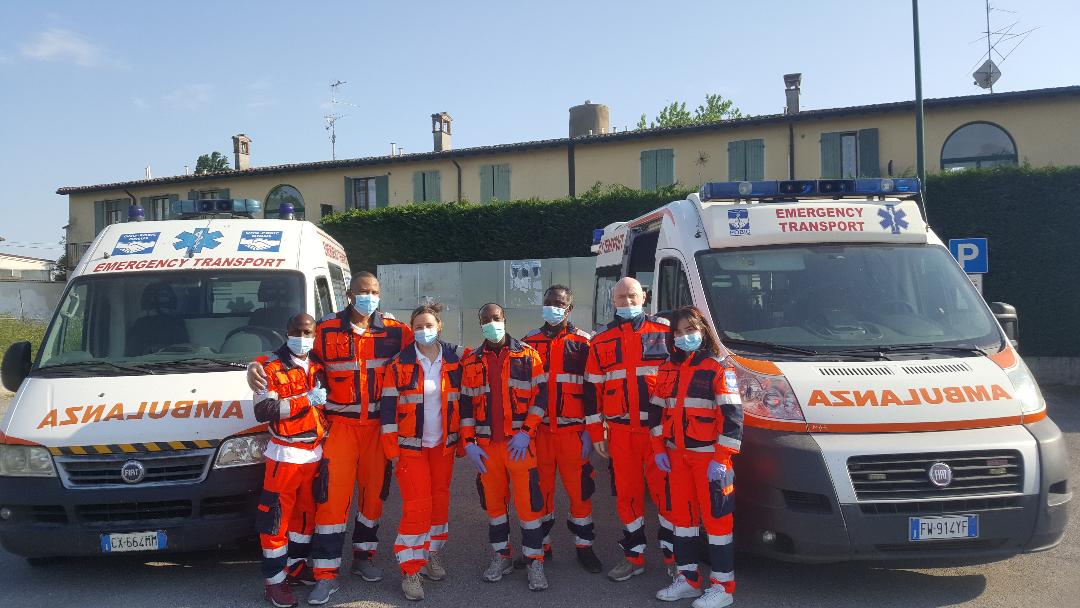
Category Emergency Transport

January 5
POBIC on two fronts: excellence in sports integration in Mantua and health mission in Nigeria
POBIC on Two Fronts: Excellence in Sports Inclusion in Mantua and a Healthcare Mission in Nigeria Organizing a top-tier sporting event to promote inclusion while simultaneously launching a life-saving healthcare project in Africa. POBIC demonstrates that its commitment to inclusion knows no boundaries and allows for no half-measures. An extraordinary event that sets an example On Sunday, December 18, Mantua’s swimming pools hosted the third edition of an event that has become a benchmark for inclusive sports in the region: the Inclusive Water Polo and Swimming Trophy organized by US Acli. The event brought together the region’s top sports teams—Andes H, Virgiliana Mantova, and Pallanuoto Verona—for a day that successfully combined competition, inclusion, and fair play. But it was more than just a sports event. The event served as a true model of how sports can break down barriers and build communities. The two water polo teams from Polisportiva Andes H competed alongside athletes from Virgiliana Mantova in an atmosphere of enthusiasm and participation that engaged not only the athletes but also the many spectators in attendance. The day saw the participation of prominent figures from the worlds of sports and government: Presidents A and B of US Acli; the leadership of Polisportiva Andes H, with captain Andrea Barbi on defense and Elena Scartezzini and Jenny Schwanius on offense; and top-level swimming coaches such as Marley Bianchi. Also present were Davide Norea, Diego Corradi, Alberto Cotti, and Viola Pilati from Virgiliana, offering a concrete demonstration of how integration in sports is possible when there is commitment, expertise, and passion. POBIC’s Role in the Organization Elena Nolli, of the POBIC Foundation, played a crucial role in coordinating the event. Together with figures such as Stefano Pilati and Umberto Nolli, Elena helped make possible an event that saw the participation of over 20 young people from Virgiliana Mantova and swimmers from Tazio in Bagnolo San Vito. The awards ceremony recognized all the key participants: Davide Sarassi, winner of the swimming events; Andrea Barbi; Stefano Pilati; Viola Pilati; Osama Bassiouni; and Claudio Zigorani. A rising star, Marta Bonetti, stood out on the Open H team. Otto Bio of Tazio di Bagnolo San Vito claimed the title in the running race. POBIC was not merely a sponsor. The organization, through Giancarlo Nolli (head of international solidarity projects) and his daughter Elena (a member of the coordinating committee), invested energy, expertise, and resources to make this event a success. An event that cemented the friendship between various members of the Mantua and Verona sports communities, creating a model for integration through sports that has already set the goal of being replicated with enthusiasm and discipline next year as well. At the same time, thousands of kilometers away… And just as Mantua was celebrating this extraordinary day of inclusive sports, POBIC was carrying out another chapter of its mission: the international one. A few weeks before the Mantua event, representatives of the foundation were in Lagos, Nigeria, to launch a partnership destined to change the lives of hundreds of children. The meeting with the Down Syndrome Foundation Nigeria marks the beginning of an ambitious project rooted in POBIC’s established expertise in Africa. For while in Mantua, inclusion takes place in the lanes of the pool and through the excitement of the races, in Nigeria, inclusion means something even more urgent: access to life-saving care. In Nigeria, one case of Down syndrome is recorded for every 865 live births. Many of these children are born with congenital heart defects that require immediate surgery. The problem is dire: heart surgery can cost over 10 million naira, a sum that is completely out of reach for the vast majority of Nigerian families. Without that surgery, many of these children will not survive. Nike Denis, national director of the Down Syndrome Foundation Nigeria, highlighted the country’s two main challenges: stigmatization and exclusion from the healthcare system. Many parents hide their children with Down syndrome for fear of discrimination, while the local healthcare system lacks the resources to provide the necessary care. Read the full article here. POBIC’s Experience That Makes a Difference POBIC is no newcomer to Nigeria. The foundation has been operating in the country since 2015, when it conducted its first training sessions on cardiopulmonary resuscitation for doctors at the Federal Medical Center in Yenagoa. Over the years, through its “Open Heart” projects, POBIC has facilitated surgical procedures for Nigerian children at leading Italian hospitals such as the Gaslini in Genoa, building a network of medical expertise and international relationships that today represents a valuable asset. The collaboration with the Down Syndrome Foundation Nigeria is the natural evolution of this decade-long commitment. POBIC brings its cardiac surgery expertise and established healthcare networks to the field, integrating them with the Nigerian foundation’s in-depth knowledge of the local context. The goal is to dramatically improve access to specialized medical care for people with Down syndrome in Nigeria, with a particular focus on cardiac emergencies. According to experts, life expectancy for people with Down syndrome in Africa is beginning to rise thanks to advances in access to healthcare. But there is still a long way to go. Priorities include early diagnosis, timely treatment, inclusive education, and awareness programs that change cultural perceptions of disability. Two Projects, One Vision Organizing a premier sporting event like the Mantua Trophy and launching a life-saving healthcare project in Nigeria may seem like two separate missions. In reality, they are two sides of the same coin: POBIC’s total commitment to the integration and inclusion of people with disabilities. In Mantua, POBIC works to build a culture of inclusive sports that serves as a model and inspiration for other communities. An event that is not just a festival and celebration, but a means of building networks, skills, and, above all, community. It is an investment in the future of young athletes who, together, learn that differences are a source of richness and that sports belong to everyone.
READ MORE
July 3
Emergency Transport: Ukraine: silent escalation, evident emergency.
Emergency Transport: Why Now, More Than Ever, We Need to Support Pobic’s Emergency Transport People continue to die in Ukraine, even though the news no longer reports it. In recent days, Ukraine has been hit by the most massive wave of Russian attacks since the start of the conflict: between June 29 and July 3, hundreds of drones and missiles struck civilian infrastructure, hospitals, populated areas, and emergency response sites. In Odesa, Kryvyi Rih, Poltava, and the Kherson region, the raids have claimed civilian lives, including children. In Kyiv and Lviv, there have been power outages, casualties, and a healthcare system under strain. All of this is happening amid the silence of the European summer. And as the media frenzy subsides, the concrete need for stable, structured, and continuous aid grows. A war that is changing its face but remains cruel. The intensification of the bombings and Ukraine’s intention to withdraw from the Ottawa Convention—in order to resume the use of landmines—signal an escalating spiral of conflict: militarily, ethically, and humanitarily. Thousands of civilians risk being trapped in besieged territories. Evacuation routes are narrowing. And ambulances often become targets rather than instruments of salvation. Pobic’s Emergency Transport: a concrete, quiet, yet vital response. Since 2014, Pobic has been active in Ukraine with humanitarian interventions that have spanned all phases of the conflict, from the invasion of Crimea to the current crisis. We have done so consistently, never letting the engines of solidarity falter. Among the most urgent and indispensable projects today is Emergency Transport: a network of emergency medical transport for children, the wounded, the chronically ill, and vulnerable people. Coordinated by local and international volunteers, it operates in high-risk areas. It is essential for ensuring rapid evacuations, transport to hospitals that are still functioning, and targeted deliveries of medicines. In a context where ambulances are deliberately targeted and bombings are on the rise, securing equipped vehicles, fuel, personnel, and maintenance has become an act of human resistance. What can you do today? Today, more than ever, the escalation of the conflict demands immediate responses. Pobic is there. But we need your help to: Fund new mobile rescue units. Ensure driving shifts and transportation on increasingly dangerous routes. Strengthen the emergency logistics and healthcare network. EMERGENCY TRANSPORT Our strength lies in bringing hope on four wheels. Donate a “little piece” of an ambulance: together, we can get the next vehicle on the road before winter 2025. A dedicated campaign is live on the Pobic website; just €25 is enough to provide an on-board first-aid kit, and €100 to replenish the oxygen supply. Every contribution brings those fleeing closer to timely rescue. DONATE NOW
READ MORE
June 8
Competition Thoughts and Colors: When Solidarity is Colored with Creativity
"Thoughts and Colors" Contest: When Solidarity Takes on the Colors of Creativity Four schools, hundreds of young artists, one big heart. The POBIC contest concluded with an extraordinary celebration of solidarity. When POBIC launched the “Pensieri e Colori” contest during the 2024–2025 school year, the idea was as simple as it was powerful: to ask children to imagine what a T-shirt expressing solidarity, mutual aid, and the joy of being together would look like. It was a way to bring together art, education, and the values that have guided the association in Italy and around the world for over thirty years. The response was overwhelming. Four Schools, One Shared Challenge From the province of Verona to that of Cremona, four schools enthusiastically took up the challenge: Solinas Elementary School in Verona, Brazzuoli Elementary School in Pozzaglio, Vescovato Elementary School, and Castelvetro Elementary School. Four different schools, united by a desire to get involved and to express, through colors and shapes, what it means to help others. The children drew inspiration from the stories told in class, from fairy tales, and from their own personal emotions. They drew hearts embracing the world, hands clasped together, rainbows connecting continents, and smiles that transcend all borders. Each piece was a small masterpiece of purity and hope. A Journey of Creativity and Anticipation After the submission deadline in March, the most exciting phase began: online voting. Families, friends, teachers, grandparents—everyone participated, sharing the drawings on social media and cheering on the young artists. POBIC’s social media channels were filled with color and messages of encouragement. For weeks, the excitement grew. The three best drawings from each school were selected, and finally, on May 30 and 31, 2026, it was time for the big celebration at the Zanzarina d’Oro in Calvatone. There, a jury of experts had the difficult task of choosing the winners from among extraordinary works, each one capable of moving and inspiring reflection. The Solidarity Podium At the end of an emotionally charged ceremony, the winners were announced: First Place – Solinas Elementary School, VeronaAn explosion of colors and symbols that captured the essence of POBIC’s mission: every child in the world deserves care, love, and a future. The winning drawing will be printed on the official POBIC 2026 T-shirt, worn by the association’s volunteers in Italy and abroad. The school will also receive a prize of 1,000 euros to be used for educational projects. Second Place – Brazzuoli Elementary School, PozzaglioA work that moved viewers with its delicacy and depth, simply conveying the value of friendship and mutual support. Third Place – Vescovato Elementary School: A creation brimming with energy and optimism that won over both the jury and the audience with its freshness and universal message of hope. Everyone Is a Winner But while the podium has its stars, the real victory was a collective one. Every child who participated helped spread a powerful message: solidarity can be colorful, joyful, and contagious. They learned that even a simple drawing can make a difference, can bring people together across distances, and can save lives. Because that is exactly what POBIC has been doing for over thirty years: saving lives. Through the Open Heart program, it has performed free surgeries on more than 50 children with heart conditions in Nigeria and Uganda. Through Emergency Transport, it has donated ambulances and trained healthcare personnel in Africa and Ukraine. In 2024 alone, it helped 2,200 displaced families in Ukraine and provided medical care to 200 children in Uganda. All of this is possible thanks to those who believe in solidarity. And this year, thanks also to the young artists from Verona, Pozzaglio, Vescovato, and Castelvetro, who have shown that change begins with a blank sheet of paper and lots and lots of imagination. What’s Next? The winning T-shirt will be worn with pride by POBIC volunteers on their upcoming international missions. A symbol that will travel from Italy to Africa, carrying with it the message that Italian children want to send to children around the world: you are not alone. We care for you. And who knows—maybe among these young artists is already the next doctor, the next volunteer, the next person who will dedicate their life to helping others. Because, as POBIC says: “If each of us decided, in our own small way, to do something for others every day, the world would be a much more beautiful place.” And these children have already started. THANKS TO YOUR SUPPORT, WE SAVE THE LIVES OF DOZENS OF CHILDREN EVERY YEAR. HELP US DO EVEN MORE. Countries 0 Children operated on 0 Children examined 0 +
READ MORE
May 5
Emergency Transport: Why a Pobic Ambulance Can Make the Difference in the Ukrainian Refugee Crisis
Emergency Transport: Why a Pobic Ambulance Can Make a Difference in the Ukrainian Displacement Crisis For three years, Ukraine has been experiencing forced displacement: nearly 5 million people are moving within the country to escape the bombings, only to try to return home when the front line retreats. Added to this are 6.36 million registered refugees in Europe—4.3 million of whom are under temporary protection in the EU—who are straining already saturated reception systems in Poland and Germany. The ’Commuting“ of Internally Displaced Persons According to the IOM, 37 % of the displaced report having changed provinces more than once in the past year; many move back and forth between the western regions, considered safer, and their provinces of origin to check on their homes or work. This logistical instability makes mobile relief resources essential to reach communities whose composition changes from month to month. Funding Gaps The UN humanitarian plan for 2025 calls for $2.6 billion, but to date it covers only 20 % of the needs: U.S. cuts have caused funding to plummet by 83 % compared to 2024. As a result, the target number of people to be assisted has dropped from 6 to 4.8 million, leaving out millions of displaced people in hard-to-reach areas. The Strain of Hosting in Europe—Poland: nearly 1 million PESEL-UKR records are still active, with emergency shelters beginning to close due to a lack of funding. Germany: 1.25 million Ukrainian refugees—including 29 % minors—are putting pressure on local schools and health services. As social safety nets fray, the demand for medical transfers from border to border and to the most capable hospital hubs is growing. Pobic’s Vital Contribution Through the Emergency Transport program, Pobic retrieves decommissioned ambulances in Italy, refurbishes them, and sends them loaded with medical supplies. A Symbolic Case — Nemirov, 2023 When a missile fragment destroyed the town’s only emergency vehicle, Pobic delivered a new ambulance, driven to the Donbas by the president of Pobic-Ukraine, Mikola Segeda. Traveling alongside the vehicle were first-aid kits, antibiotics, blankets, and warm clothing assembled by volunteers in Lombardy. Read the article here to learn more about the story. Every Pobic convoy departs with: Medications for surgical and emergency use (pain relievers, antibiotics, saline solution). First-aid kits for the rapid evacuation of injured civilians. Thermal blankets and winter clothing for those living in makeshift shelters or unheated basements. Clothing, non-perishable food, and toys for children. Our Goals for 2025 Expand the fleet: the minimum goal is to donate three more ambulances to the municipalities of Kharkiv, Zaporizhzhia, and Mykolaïv, where vehicles are most frequently targeted. Train local staff: 48-hour modules on triage and in-ambulance emergency care for Ukrainian nurses. Long-distance support: continue the program launched in 2010 at the Nemirov orphanage, ensuring monthly supplies of clothing and educational toys. Why Every Ambulance Counts Right Now Addressing displacement: A fully equipped vehicle can follow displaced people as they move, providing care where hospitals are no longer accessible. It fills budget gaps: as UN funds dwindle, a fully stocked ambulance is worth an average of €85,000, covering a gap that international agencies can no longer finance. It relieves the burden on host countries: reducing untreated injuries at the border means fewer costly hospitalizations in Berlin or Warsaw. EMERGENCY TRANSPORT Our strength lies in bringing hope on four wheels. Donate a ”little piece” of an ambulance: together we can get the next vehicle on the road before winter 2025. A dedicated campaign is live on the Pobic website; just €25 is enough to provide a first-aid kit on board, and €100 to restock the oxygen supply. Every contribution brings those fleeing closer to timely medical assistance. DONATE NOW
READ MORE
April 26
Ukraine: all our history from the beginning to the present
Ukraine: Our Entire History from the Beginning to Today Our mission in Ukraine did not begin with the outbreak of war, nor was it a response to a sudden emergency. It is a story with deep roots, made up of encounters, small steps, and relationships built over the years. A story we want to share with you, from the beginning to today. 2005: The First Steps in Krasnograd It was 2005 when Pobic crossed the Ukrainian border for the first time. The destination was Krasnograd, a small town in the Kharkiv Oblast, in eastern Ukraine. In a context marked by poverty and hardship, we found vibrant, dignified communities eager to build a better future. Our first initiative was simple yet essential: direct support for families in need, with a special focus on those with children with disabilities. We didn’t have extensive resources, but we were fully committed to being there, to accompanying these families with concrete and ongoing support. SPONSORSHIP PROGRAM 2008: Training for Resilience in Lviv In 2008, we realized that helping also meant building skills. So, in collaboration with Yosypovych University in Lviv, we organized courses in nursing care and the management of major trauma. During a time when the country was still relatively stable, investing in the training of healthcare personnel meant strengthening a fragile yet vital network capable of responding to both routine and extraordinary emergencies. 2005–2025: Our Long-Standing Friendship with Nemirov At the same time, back in 2005, one of our most enduring projects was taking shape: our support for the Nekrasov Orphanage in Nemirov, in the Vinnytsia Oblast. Year after year, we brought basic necessities, educational materials, and toys to the children living at the facility. But that’s not all. We also organize summer programs for children with dermatological and musculoskeletal conditions, offering them therapeutic and wellness stays in Italy with supportive host families. The Nemirov mission, still active today, is the most vivid testament to our constant and quiet commitment. Since 2022: War in Ukraine, a New Emergency When war broke out in Ukraine in 2022, everything changed. The Ukrainian crisis erupted with devastating force, and with it, the population’s needs. We did not shy away: we organized humanitarian convoys, distributing medications, clothing, food, and emergency supplies to displaced populations. We expanded our presence, striving to offer not only material support but also human support. 2023: An Ambulance to Save Lives In 2023, a dramatic incident required an immediate response from us. In Nemirov, the only available ambulance was destroyed by a fragment of a Russian missile. In response, we donated a new, fully functional ambulance from Italy, which restored hope to an entire community. We also loaded the ambulance with clothing and medicines, which were delivered thanks to the determination of the president of Pobic Ukraine, Mikola Segeda. 2024: Strengthening Healthcare, Building the Future In 2024, our efforts were further strengthened: we donated a second ambulance to the Vinnytsia Oblast and launched specialized healthcare training programs for managing emergencies in a wartime context. This was a crucial step toward ensuring not only resources but also expertise, so that those living on the front lines of the conflict can count on adequate support. Today: The Mission Continues Twenty years since the start of our mission in Ukraine, we know that every effort has built something: a network of solidarity, tangible support, and a future that is possible even in the darkest moments. With your help, we can keep going. Every donation directly supports our projects: ambulances, medicines, training, and basic necessities. Donate now and walk with us alongside those who cannot stop hoping. THANKS TO YOUR SUPPORT, WE SAVE THE LIVES OF DOZENS OF CHILDREN EVERY YEAR. HELP US DO EVEN MORE. Countries 0 Children operated on 0 Children examined 0 +
READ MORE
Apr 12
2023 – Mission to Ukraine in Nemirov: an ambulance to start again
2023 – Mission to Nemirov, Ukraine: An Ambulance to Get Back on Track There was only one ambulance left for the entire city of Nemirov, Ukraine. Then, one day in 2023, even that was gone. A fragment of a Russian missile—partially intercepted, but not quite enough—struck the only available emergency vehicle head-on. A silent tragedy, one that might have gone unnoticed elsewhere, but which for a small community like Nemirov meant losing its last chance for emergency transport—the only means of saving lives. A blow to the heart, in the midst of a war in Ukraine that is eroding the country’s social and healthcare fabric day by day. When Concrete Answers Are Needed We didn’t need to think about it for long. As Pobic, having been involved in numerous missions in Ukraine for years, we knew what to do. Good intentions weren’t enough; an ambulance was needed. Immediately. So we decided, as an emergency measure, to donate a vehicle decommissioned in Italy—no longer used for local emergency response but still in perfect working order. And so a new mission to Ukraine began: discreet, practical, filled with humanity and essential equipment. SPONSOR A CHILD From Afar: So Much More Inside That Ambulance That ambulance, driven by Pobic Ukraine President Mikola Segeda, carried more than just a technical solution. We wanted it to be a tangible sign that someone, from afar, is listening and responding. On board were clothes, medicines, and basic necessities, collected thanks to the generosity of those who, even from afar, have not forgotten the Ukrainian people. Everything was loaded by hand, piece by piece, as one does with the things that truly matter. Beyond the Emergency, Continuity The mission in Nemirov, Ukraine, does not end with a single delivery. It is part of a commitment that has been with us for years—one made up of quiet interventions, small logistical miracles, and relationships built on the ground. The crisis in Ukraine has shown just how fragile even the most basic infrastructure can be. But it has also shown how resilient a proud community can be, if supported. THANKS TO YOUR SUPPORT, WE SAVE THE LIVES OF DOZENS OF CHILDREN EVERY YEAR. HELP US DO EVEN MORE. Countries 0 Children operated on 0 Children examined 0 +
READ MORE
April 26
Ivory Coast: Health training as a driver of change, the Pobic model
Ivory Coast: Healthcare Training as a Driver of Change—The Pobic Model During its mission in the Ivory Coast, which began in 2012, the Pobic association chose to complement the provision of emergency medical equipment with another essential initiative: the training of local healthcare personnel. In a context where infrastructure was minimal and the number of doctors extremely low, the opportunity to build capacity directly on the ground was a strategic priority. The Importance of Healthcare Training The provinces of Bongouanou, Arrah, and M’Batto—the mission’s areas of operation—were characterized by limited access to healthcare services and the near-total absence of structured emergency protocols. As medical transport vehicles were introduced through the Emergency Transport project, it was clear that without adequate training, their impact would be limited and short-lived. Pobic’s response was to launch technical training courses focused on basic yet essential procedures, such as cardiopulmonary resuscitation (CPR) for adults and children. SPONSOR A CHILD Methodology and Training Activities The training was conducted through theoretical and practical sessions, using training manikins to simulate emergency interventions. The courses were aimed at: Hospital doctors and nurses. Paramedic staff in outlying villages. The personnel were trained to recognize critical situations, perform initial life-saving maneuvers, and correctly use the emergency equipment available in the ambulances. A key element of Pobic’s training approach was the transfer of learning tools: the manikins used for training were donated to the Bongouanou Hospital at the end of the mission, thereby enabling local staff to continue practicing and updating their skills independently. Objectives Pursued The goal of the training was not simply to provide instruction while the international team was present, but to: Build local operational capacity, reducing dependence on external aid. Ensure the continuity of skills over time. Strengthen the healthcare system through qualified personnel who are better equipped to manage emergencies. Results Achieved At the end of the mission, local healthcare personnel had acquired: Basic operational skills in managing critically ill patients. Improved use of the ambulances and equipment provided. Greater autonomy in handling emergency situations without the immediate intervention of external specialists. These results helped strengthen the regional emergency network established through the Emergency Transport project, making emergency response in rural areas of the Ivory Coast more efficient and safer. Results Achieved The healthcare training carried out by Pobic in Côte d’Ivoire demonstrates that developing local expertise is essential to ensuring the sustainability of humanitarian interventions. Simply delivering vehicles or equipment is not enough: it is necessary to invest in people, in their training, and in their ability to keep services running even after international missions have ended. The model adopted by Pobic has made it possible to leave a concrete and lasting impact, helping to improve access to emergency services in one of the country’s most vulnerable areas. THANKS TO YOUR SUPPORT, WE SAVE THE LIVES OF DOZENS OF CHILDREN EVERY YEAR. HELP US DO EVEN MORE. Countries 0 Children operated on 0 Children examined 0 +
READ MORE
April 26
Ivory Coast: 4 ambulances donated for the Emergency Transport project
Ivory Coast: 4 Ambulances Donated for the Emergency Transport Project In 2012, the Pobic association launched an operational project to develop emergency medical transport in the province of Bongouanou, in Ivory Coast. The mission focused on providing emergency vehicles and establishing the region’s first organized emergency response system. The Initial Situation At the start of the mission, the area’s healthcare and logistical conditions were extremely precarious. There was no operational ambulance system available throughout the entire province. Patients in need of urgent care were transported in vehicles that lacked any health and safety standards, often forced to endure hours-long journeys on unpaved and damaged roads. The rainy season further exacerbated the situation, rendering many roads impassable and increasing the risks in emergency situations. SPONSOR FROM AFAR: Pobic’s Intervention To address this critical issue, Pobic implemented a structured program that included: The donation of four fully equipped ambulances. Technical training for local staff assigned to operate the emergency vehicles. The strengthening of emergency procedures through the introduction of first-aid protocols. The ambulances were delivered directly to the Bongouanou Hospital and to outlying health facilities. During the transfer, one of the vehicles was used to rescue an injured person in a traffic accident, immediately confirming the necessity and effectiveness of the initiative. Objectives and Results Achieved The main objective of Emergency Transport was to reduce the time it takes for people in rural areas to access healthcare services, thereby improving their chances of survival in emergency situations. Within a few months of the service’s launch, the following were observed: An improvement in the management of medical transport, An increase in the population’s trust in hospital facilities, and A greater response capacity on the part of the local healthcare system in emergency situations. Furthermore, staff training ensured proper vehicle management and established basic emergency management skills, fostering greater operational autonomy. Conclusion The Emergency Transport project marked a fundamental step forward in Pobic’s strategy in the Ivory Coast: not only providing material resources, but also strengthening local capacities, creating a concrete and lasting impact on public health in the region. Through targeted interventions, tailored to the actual needs of the region, it has been possible to establish the first embryonic emergency response network in one of the country’s most disadvantaged areas. THANKS TO YOUR SUPPORT, WE SAVE THE LIVES OF DOZENS OF CHILDREN EVERY YEAR. HELP US DO EVEN MORE. Countries 0 Children operated on 0 Children examined 0 +
READ MORE
April 26
Ivory Coast: the mission from the words of those who lived it.
Ivory Coast: The Mission in the Words of Those Who Experienced It. The Start of the Mission in Ivory Coast Our arrival at Abidjan Airport on July 30, 2012, wasn’t exactly smooth. Most of the luggage that had left from Milan Malpensa had not been loaded onto the plane during our layover in Tunis. So, for four days, we found ourselves managing our stay with the bare essentials: a few changes of clothes and shoes suitable for a tropical climate, with temperatures between 24 and 26 degrees and humidity close to 70%. Certainly not the best way to start a work assignment. After taking care of the administrative formalities and waiting for our luggage to be retrieved, we began to get a feel for Abidjan. The city appeared congested with thousands of dilapidated taxis and buses, choked with smog, and more chaotic than anyone could have imagined. Amid widespread urban decay and poverty, daily life unfolded amid misery, suffering, and extremely precarious sanitary conditions. Health Crisis and Urban Conditions in Abidjan Unlike our experience during the 2009 mission, street lighting had improved, but there were still numerous checkpoints set up by the militia, dotting the route along the main thoroughfares. The flashlights of the soldiers, who were checking vehicles at night, illuminated our pale and weary faces: the documents of our local escorts were our only guarantee of safety. At the time, Ivory Coast was still marked by ten years of instability and internal guerrilla warfare between the factions of Ouattara and Gbagbo. The country, the world’s leading producer of cocoa and a major exporter of coffee and rubber, also possesses vast mineral wealth, including diamonds, gold, oil, and manganese. However, its economic potential was held back by political tensions and evident urban decay. SPONSOR A CHILD Visit to Grand Bassam: Ivory Coast’s Colonial Heritage While waiting for our luggage, we visited Grand Bassam, the former French colonial capital, now a major tourist and artisanal hub. Despite the beauty of the place, environmental degradation was evident, with piles of trash (mostly plastic) littering the beaches. Humanitarian Aid: Support for the Bongouanou Hospital Our arrival at the Bongouanou Hospital was greeted with great warmth. Memories of our previous mission were still fresh—during which we had delivered hospital furnishings, defibrillators, and operating room equipment, and organized medical training for doctors and nurses. This time, our task involved furthering medical training, particularly in the management of cardiovascular emergencies. In addition, we were scheduled to deliver four ambulances intended for transporting patients from the villages to the local hospital and, if necessary, all the way to Abidjan. The effectiveness of these donations was immediately evident: during the transfer of the ambulances, a traffic accident forced the immediate use of one of the vehicles to transport an injured person to the hospital. Healthcare Training and Local Resilience Meanwhile, training courses on cardiopulmonary resuscitation (CPR) continued using training manikins for adults and children, which were subsequently donated to the hospital so that practical exercises could continue independently. On weekends, visits to villages and meetings with local communities were organized. The trip to the forest-surrounded village of origin of our valued Ivorian colleague Tano was particularly memorable. There, in a simple and authentic setting, the children—many of whom were seeing a white man for the first time—reacted first with fear and then with enthusiasm, happily participating in photos and impromptu games. Local Traditions and Culture of the Horn of Africa There was no shortage of local celebrations, such as the visit to the village of Fabien, another local notable, where we were welcomed with traditional meals—including dishes made with porcupine and stewed agoutis, forest delicacies offered with great hospitality. The 52nd Anniversary of Independence: A Historic Moment Finally, on August 7, 2012, we took part in the celebrations marking the 52nd anniversary of the Ivory Coast’s independence from France. The city of Bongouanou came alive with parades, dances, colorful markets, and cultural events that involved the entire population. Conclusion The Emergency Transport mission represented an important initiative in international cooperation on the ground, successfully integrating medical and logistical aid with a deep respect for local culture, thereby strengthening the bonds between peoples who are distant yet united by the same spirit of solidarity. THANKS TO YOUR SUPPORT, WE SAVE THE LIVES OF DOZENS OF CHILDREN EVERY YEAR. HELP US DO EVEN MORE. Countries 0 Children operated on 0 Children examined 0 +
READ MORE
April 26
2007 – Mission in Ivory Coast: ambulances and training to strengthen local healthcare
2007 – Mission in Ivory Coast: Ambulances and Training to Strengthen Local Healthcare In 2007, the Pobic association launched its first humanitarian healthcare initiative in Ivory Coast, in the provinces of Bongouanou, Arrah, and M’Batto—areas characterized by a severe lack of healthcare infrastructure and significant difficulties in accessing timely medical assistance. Ivory Coast: Where the Mission Began Bongouanou, the capital of the province of the same name, is located in central-eastern Ivory Coast. The area is predominantly agricultural, with a limited road network and underdeveloped healthcare services. The lack of emergency transportation posed a serious problem, contributing to high rates of preventable mortality in the event of accidents or medical complications. LONG-DISTANCE SPONSORSHIP Origins of the Project From the outset, the initiative presented itself as complex from both an economic and a technical-scientific standpoint. Thanks to the efforts of Dr. Carlo Antonio Calamari, then head of the AREU in Mantua, it was possible to involve the AREU in Milan and the Carlo Poma Hospital in Mantua. On July 28, 2008, in Mantua, a partnership was officially established between AnPobic (now Pobic), the Carlo Poma Hospital, the Lombardy AREU, and the Bongouanou Hospital. This agreement marked the formal starting point for operational activities in Côte d’Ivoire. Ivory Coast: Activities Carried Out The activities carried out during the mission in Ivory Coast followed an integrated approach, aimed not only at addressing immediate shortages but also at building a more solid foundation for the future of local health services. The interventions were multi-faceted, simultaneously addressing the problem of a lack of emergency medical equipment and the need for adequate professional expertise to use it. In this way, Pobic’s efforts were not limited to a simple material donation but promoted a transfer of skills aimed at ensuring a lasting impact in the region. Below is a summary of the main activities carried out: The project was structured around two main components: Donation of three fully equipped ambulances, destined for Bongouanou and the neighboring provinces of Arrah and M’Batto. Technical training for local healthcare personnel, featuring practical and theoretical modules on emergency and urgent care management. The training was led by Italian healthcare professionals with direct experience in the local emergency response system. These initiatives made it possible to: Reduce transport times for critically ill patients. Improve the response capacity of local first responders. Introduce standardized response protocols for medical and trauma emergencies. How to Contribute The mission in Ivory Coast is a concrete example of how targeted interventions can radically transform healthcare response capacity in vulnerable contexts. However, the need for support continues. Ambulances require maintenance, staff need refresher training, and many other communities are awaiting similar interventions. You can help support these initiatives through donations, which will make it possible to: Keep emergency vehicles operational. Expand training programs to other regions. Provide essential medical equipment to local healthcare facilities. To make a donation or learn more about our missions, visit the official Pobic website. THANKS TO YOUR SUPPORT, WE SAVE THE LIVES OF DOZENS OF CHILDREN EVERY YEAR. HELP US DO EVEN MORE. Countries 0 Children operated on 0 Children examined 0 +
READ MOREOPERATING HEADQUARTERS
- Registered office / operational office Via Romanino 1 25123 Brescia
- +39 0376920464
- ong-pobic@ong-pobic.org
CONTACTS
Registered/Operational office
Via Romanino 1
25123 Brescia
Tel - +39 0376-920464
Headquarters
V. Belfiore No. 9
Bozzolo (MN)
Operations Headquarters
Via Santa Maria in Conio, 10
35131 Padua PD
SUBSCRIBE TO THE NEWSLETTER
But let there be a nest in the velvet viverra bibendum in ac nisi. Even let the dui vitae sem
GALLERY




- ONG POBIC ODV