


Category Fundraiser
Sep 20
World Heart Day: For many children, getting treatment is still a privilege
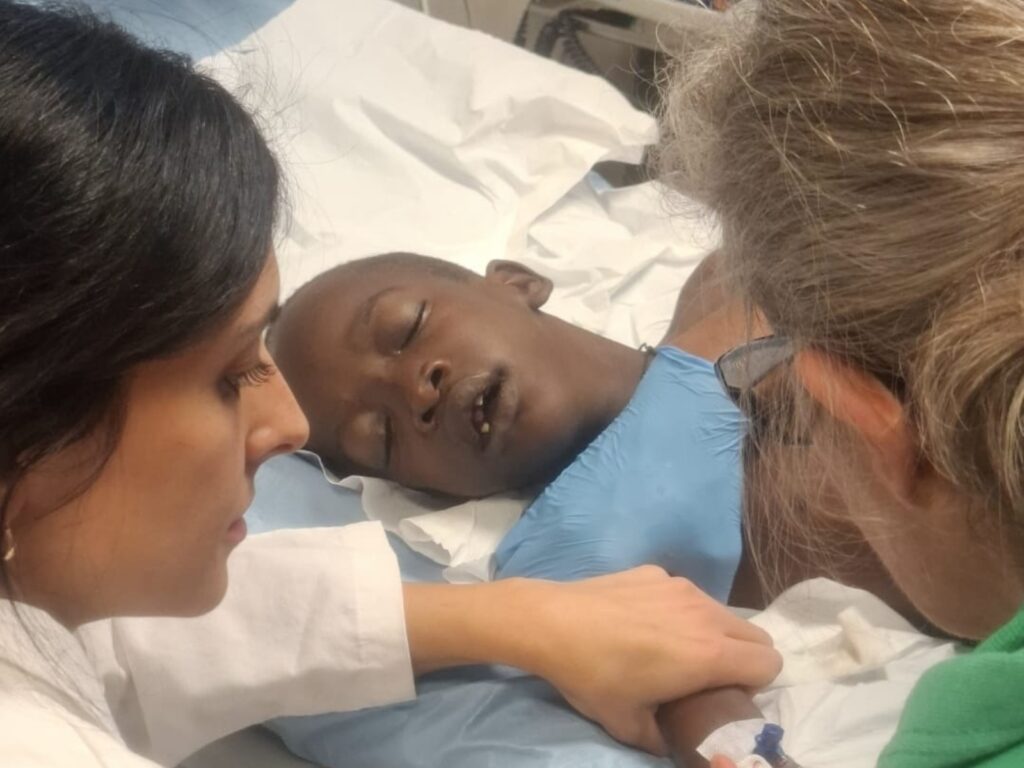
World Heart Day: For Many Children, Access to Care Is Still a Privilege Childhood Heart Disease: When Place of Birth Determines Access to Care A child anywhere in the world can develop heart disease. What makes a difference—often a decisive one—is the ability to detect it early and receive the necessary treatment. September 29 marks World Heart Day, promoted by the World Heart Federation to raise awareness about cardiovascular diseases and their impact. For POBIC, this occasion also represents an opportunity to address a less visible inequality: the one that separates children who can quickly access a diagnosis and treatment from those for whom seeking care remains a difficult, costly, or even impossible journey. In fact, not all children born with a heart condition have the same opportunities ahead of them. Congenital heart defects are abnormalities in the structure or function of the heart present from birth. Some can be managed, while others require prompt diagnosis, specialized care, or surgery. In countries with well-established healthcare systems, a child with a heart condition can undergo the necessary tests as early as during pregnancy or in the first days of life. From that point on, the child is monitored by pediatric cardiologists and guided toward the most appropriate treatment plan. In many parts of the world, however, this care network is either unavailable or accessible only to a portion of the population. Distance from hospitals, a shortage of specialized physicians, the cost of tests, and the lack of facilities capable of performing complex procedures can delay diagnosis. As a result, the condition is often detected only when symptoms are already evident and the child’s condition has become more difficult to treat. It is in this gap between need and access to care that a treatable condition can become life-threatening. Not all heart conditions are present from birth. In addition to congenital problems, there are heart conditions that can develop during childhood. Among these is rheumatic heart disease, caused by damage to the heart valves resulting from one or more episodes of rheumatic fever. According to the World Health Organization, this is the most common acquired heart disease among people under the age of 25. It primarily affects children and adolescents living in low- and middle-income countries or in communities where access to health care is limited. The disease can result from a streptococcal infection which, if recognized and treated promptly, can prevent very serious consequences. However, not all families have the means to reach a healthcare facility, cover the costs of treatment, or consult staff capable of making a correct diagnosis. Here, too, the problem is not merely the presence of the disease. It is the lack of a system capable of recognizing it and intervening before the damage to the heart becomes permanent. Treating a child means building an entire care pathway. When it comes to heart surgery, attention understandably focuses on the operating room. But making a child’s treatment possible involves a much broader process. Before surgery, there are consultations, tests, precise diagnoses, and collaboration among professionals. When treatment must take place outside the child’s home country, it is necessary to organize the trip, prepare the necessary documents, identify an available facility, and ensure that the child and their companion are properly accommodated. After the operation, recovery and follow-up care begin, continuing until the child returns home and their medical journey continues. Behind every life saved, therefore, lies a network of doctors, hospitals, volunteers, families, organizations, and donors—a diverse group of people who each take on a share of the responsibility needed to guide that child from diagnosis to treatment. It is a complex task, often unseen but indispensable. Open Heart: The Heart of POBIC’s Commitment Through the Open Heart project, POBIC helps children with serious heart conditions who cannot receive the necessary treatment in their own country. The goal is not merely to provide access to surgery. It means supporting the child throughout the entire process, collaborating with healthcare facilities, managing the organizational aspects, and supporting the family at a time when the fear of the illness is compounded by the challenge of facing a long journey away from home. The stories of Jeremiah and Perl, who came from Uganda and underwent surgery in Italy, vividly illustrate the value of this network. Their journey is not an isolated incident but part of a commitment that POBIC has been carrying out for years to offer a chance at treatment to children who might otherwise go without it. Every surgery gives a child a future. But it also speaks to something greater: it demonstrates what can happen when medical expertise, international cooperation, and solidarity work together toward a common goal. Early Diagnosis Can Change a Life Ensuring access to care also means strengthening the ability to detect conditions before they become more serious. This is why pediatric cardiology visits, access to diagnostic tools, training for local healthcare staff, and ongoing collaboration with hospitals and specialists are essential. Early diagnosis of a heart condition allows for the evaluation of the most appropriate course of action and, when possible, intervention before the child’s condition worsens. Health cooperation cannot, therefore, be limited to responding to emergencies: it must contribute to building expertise, relationships, and continuity. This perspective is also crucial for the work POBIC has launched in Ghana on rheumatic heart disease, with the goal of increasing awareness of its prevalence among children and laying the groundwork for interventions based on reliable data. World Heart Day: Turning Awareness into Tangible Opportunity World Heart Day reminds us every year how important it is to protect cardiovascular health. But not everyone starts from the same starting point, and not everyone has access to the same resources. For some children, the problem isn’t knowing that treatment exists—it’s being able to access it. Bridging this gap requires expertise, organization, and resources. It requires hospitals willing to care for young patients and skilled doctors
READ MORE
December 6th
A life-changing gift: remote adoption for Christmas
A Gift That Changes Lives: Long-Distance Sponsorship for Christmas A special gesture that brings hope, happiness, and a future to those who need it most. At a time like Christmas, when we’re inundated with material possessions, giving the gift of long-distance sponsorship can be the most meaningful gift of all. It’s a way to give the holidays deep meaning, transforming an act of generosity into a real opportunity for change. This kind of gift is more than just symbolic; it represents a genuine investment in the lives of those who, without this help, would not have access to education, medical care, or decent living conditions. Supporting a child in need means offering hope, a future, and peace of mind—an act that warms the heart of the recipient and enriches the giver. Giving the gift of a long-distance sponsorship is a symbol of sharing and humanity, perfect for embracing the true spirit of Christmas. https://youtu.be/TjU5Bzg0eBc The Tangible Impact of Long-Distance Sponsorship Long-distance sponsorship is not just financial aid: it is the beginning of a journey that can radically change a child’s life. The data speaks for itself: according to research published in the journal Science Daily, children supported through these programs are 40% more likely to complete high school and 50–80% more likely to complete college. These gains also translate into future employment, with a 35% increase in the likelihood of securing stable employment. In addition to education, funds raised through long-distance sponsorship ensure access to essential medical care, clean water, and nutritious food. Every contribution not only improves the life of the individual child but also has positive effects on their families and communities, fostering long-term sustainable development. A Mutual Gift That Builds Bonds Long-distance sponsorship isn’t just about donating material resources. It’s a gesture that creates a unique bond between the giver and the recipient. Through letters, updates, and little drawings, you can follow the progress of the child you’re helping, making this experience deeply rewarding. It’s a relationship that enriches both parties: while the child receives vital support, the sponsor discovers a new dimension of empathy and solidarity. https://youtu.be/A50pNFikpyo Long-Distance Sponsorships with Pobic This year, choose to make a difference with a gesture that will last over time. Giving the gift of a long-distance sponsorship—or becoming a sponsor yourself—means turning the holiday season into an opportunity for real change. Every small contribution is a step toward a more just world, where every child can have access to fundamental rights such as education, health, and happiness. Contact the NGO Pobic to find out how to sponsor a child and turn your generosity into tangible change. Every small contribution is a big step toward a more just world. Offer hope and happiness to those who need it most, giving them a truly unforgettable Christmas. THANKS TO YOUR SUPPORT, WE SAVE THE LIVES OF DOZENS OF CHILDREN EVERY YEAR. HELP US DO EVEN MORE. Countries 0 Children operated on 0 Children examined 0 +
READ MORE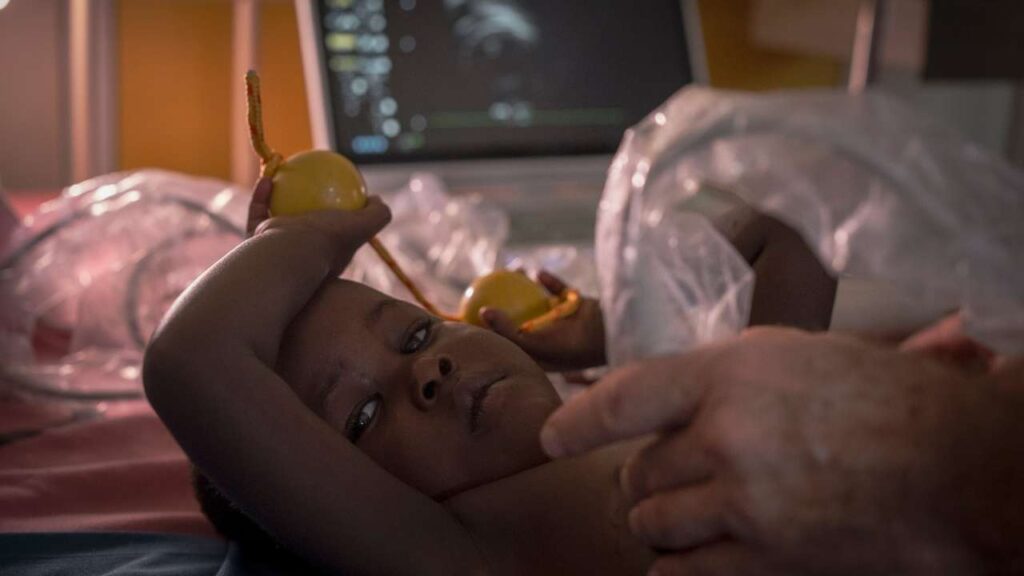
May 6
Jernita is now healed. The biggest challenge, however, begins now.
Jernita has now recovered. The biggest challenge, however, begins right now: Jernita can’t breathe. Her heart is failing, and she has only 9 months to live. We met her in Uganda, and her situation was immediately clear: Jernita has very little time left to live. We cannot let her life end so soon. Help us give her a second chance—it’s a matter of life and death. Listen to Jernita’s mother’s plea: Let’s give her a future. An operation saved Jernita’s life. But the biggest challenge begins now. After healing her heart, we must find the strength to give her a future. You can be of great help in this. Find out how by clicking the link below. SPONSOR JERNITA. Jernita’s medical condition is dire. Jernita Apio (date of birth: May 28, 2023) is a 9-month-old girl who was examined at the Uganda Heart Institute Clinic. She struggles to breathe and sweats constantly from the exertion. Her heart cannot withstand the strain. An evaluation revealed a complex congenital heart defect: Type I truncus arteriosus with mild truncus valve regurgitation. Jernita is dying, and we must save her. Jernita Apio has been recommended for referral abroad for surgical correction of her complex congenital heart defect. This is truly a life-or-death situation. Help us save her. Below, we’ll tell you who will be performing the surgery. VIEW THE OFFICIAL FUNDRAISER ON GOFUNDME Jernita has undergone surgery. The surgery is only the first step, but Jernita has undergone surgery. The surgery was a success. Her fight for life began in Uganda. We weren’t sure she would survive the journey. Her condition was so critical. Yet her little heart held on until the day of the surgery, which Dr. Michielon and his team performed with dedication and care. The little girl’s life has now been saved. But we must ensure she has a future. Don’t stop now—help her and donate. Just 5 euros is enough. CHECK OUT THE OFFICIAL FUNDRAISER ON GOFUNDME Our partnership with the Gaslini Hospital in Genoa: Ariella will arrive in Italy on June 3 and will be taken to the Gaslini Hospital in Genoa. The institute has been collaborating with the Open Heart project for many, many years and has helped us save dozens and dozens of children. Over the years, more than 60 children have escaped death thanks to this program, and the Giannina Gaslini Institute in Genoa is on the front lines with us to ensure these young lives are not lost. Here is the institute’s official website: https://www.gaslini.org/ Here are some questions you might be asking: How will the donations be used? Every euro donated will go directly toward Ariella’s surgical needs. Our NGO operates with the utmost financial transparency, ensuring that every contribution has a direct impact on their lives. Who selects the beneficiaries of the surgeries? The beneficiaries—in this case, Jernita Ariella and Mary—are selected based on medical criteria and need. We’ve been collaborating with doctors at Gaslini for years to ensure that resources go to those who need them most urgently. And by “urgent,” we mean life-threatening situations. Can I trust that donations will be used properly? Absolutely. Every transaction is tracked, and every financial detail will be made available to anyone who wishes to have further information. POBIC has been operating in the nonprofit sector for over 30 years and makes honesty one of its core values. Check out all our TRANSPARENCY DOCUMENTS on our website. What is your track record in handling cases like these? We have a long history of success in providing life-saving care to children in similar situations. The positive stories of the children we’ve helped are tangible proof of our commitment. Take a look at our work in Nigeria What happens if you don’t reach your fundraising goal? Even if we don’t reach the full goal, every donation brings us closer to our goal. Every euro counts and will help ensure a better future for Ariella. Can I make a donation even if I can’t give much? Absolutely! Every donation, regardless of the amount, makes an impact. Even small contributions can make a difference. Many small contributions, dear friend, add up to an enormous, immense result. How will the project’s progress be communicated? We’ll regularly update our community through our social media channels. We want you to closely follow the progress you’re helping to make. And you can always visit this page on GoFundMe for real-time updates on our progress. Learn more about us: The non-governmental organization POBIC was founded on September 28, 1992, as AnPobic, an acronym for the National Association for the Promotion of Charitable Works in Support of Civilian Disabled Persons. Its founders were Piras, Triesto, and Finetti, all from Brescia. In its early years, the organization focused on the issues facing civilians with disabilities in northern Italy. Paolo Federico Novellini became president on April 1, 1996, succeeding Giuseppe Lucchesi. Its first international initiative took place in 1999 in Kosovo with the delivery of clothing and food, and the association’s bylaws were amended for the first time to allow it to expand its activities abroad. The year 2001, meanwhile, saw exploratory missions to Ukraine, Morocco, and the Ivory Coast. READ THE FULL STORY HERE THANKS TO YOUR SUPPORT, WE SAVE THE LIVES OF DOZENS OF CHILDREN EVERY YEAR. HELP US DO EVEN MORE. Countries 0 Children operated on 0 Children examined 0 +
READ MORE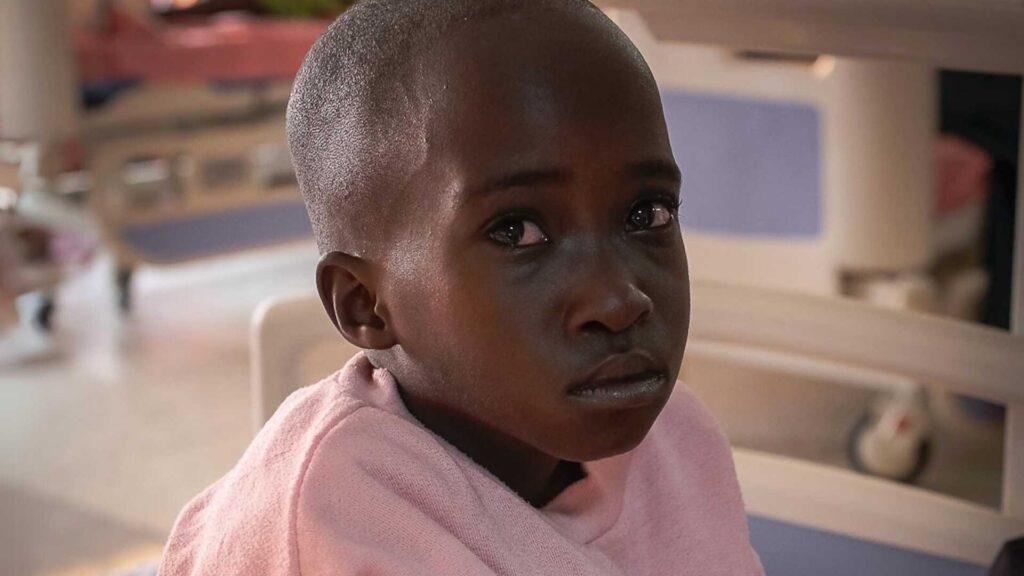
May 6
Mary's heart has healed. Now we have to give her a future.
Mary’s heart has healed. Now we must give her a future. Mary’s heart is failing. It can no longer supply oxygen to her body. On our last trip to Uganda, we met this little 8-year-old warrior. But she doesn’t have much time left. Her heart can’t take it anymore. That’s why we’re bringing her to Italy for emergency heart surgery. Help us! Donate five euros now. It’s a matter of life and death. Listen to Mary’s sister’s plea: LET’S GIVE HER A FUTURE. Surgery has saved Mary’s life. But the biggest challenge begins now. After healing her heart, we must find the strength to give her a future. You can be of great help in this. Find out how by clicking the link below. SPONSOR MARY Mary’s medical condition is dire. Mary Asiimwe (born November 21, 2015) is an 8-year-old girl hospitalized at the Uganda Heart Institute for a congenital heart defect. She has spent more of her life in the hospital than with her family. Her latest echocardiogram shows tetralogy of Fallot with severe infundibular stenosis and normal-sized confluent pulmonary arteries and pulmonary valve. Her oxygen saturation is 59% and she weighs 14 kg. In short, she can barely breathe. Her oxygen saturation is just over half of what a normal child should have. Mary Asiimwe will only survive if she can undergo surgery at Gaslini Hospital in Genoa. This is truly a life-or-death situation. Help us save her. Below, we’ll tell you who will be performing the surgery. CHECK OUT THE GOFUNDME CAMPAIGN FOR MARY Mary’s Life-Changing Surgery Mary is safe. The oldest of the three Ugandan girls who arrived in Italy for the Open Heart project—diagnosed during the latest trip organized by the NGO Pobic in collaboration with Gaslini Hospital—has undergone the long-awaited surgery. Mary’s case was extremely serious—not least because her age didn’t work in her favor. The surgery was a success; she’ll finally have a new life. At this point, however, it’s essential to realize that a life is truly saved only when there’s a future ahead of it. So here’s the task: Give her a future. You can help her too—all it takes is a small donation. 5 euros. Or share this information with your friends and acquaintances. There’s a little girl who needs you. CHECK OUT THE FUNDRAISER FOR MARY ON GOFUNDME Our partnership with the Gaslini Institute in Genoa Mary will arrive in Italy on June 3 and will be taken to the Gaslini Institute in Genoa. The institute has been collaborating with the Open Heart project for many, many years and has helped us save dozens and dozens of children. Over the years, more than 60 children have escaped death thanks to this program, and the Giannina Gaslini Institute in Genoa is on the front lines with us to ensure these young lives are not lost. Here is the institute’s official website: https://www.gaslini.org/ Here are some questions you might be asking: How will the donations be used? Every euro donated will go directly toward covering the costs of Ariella’s surgery. Our NGO operates with the utmost financial transparency, ensuring that every contribution has a direct impact on their lives. Who selects the beneficiaries of the surgeries? The beneficiaries—in this case, Jernita Ariella and Mary—are selected based on medical criteria and need. We’ve been collaborating for years with the doctors at Gaslini to ensure that resources go to those who need them most urgently. And by “urgent,” we mean life-threatening situations. Can I trust that the donations will be used properly? Absolutely. Every transaction is tracked, and every financial detail will be made available to anyone who wishes to have further information. POBIC has been operating in the nonprofit sector for over 30 years and considers honesty one of its core values. Check out all our TRANSPARENCY DOCUMENTS on our website. What is your track record in handling cases like these? We have a long history of success in providing life-saving care to children in similar situations. The positive stories of the children we’ve helped are tangible proof of our commitment. Take a look at our work in Nigeria What happens if you don’t reach your fundraising goal? Even if we don’t reach the full goal, every donation brings us closer to our goal. Every euro counts and will help ensure a better future for Ariella. Can I make a donation even if I can’t give much? Absolutely! Every donation, regardless of the amount, makes an impact. Even small contributions can make a difference. Many small contributions, dear friend, add up to an enormous, immense result. How will the project’s progress be communicated? We’ll regularly update our community through our social media channels. We want you to closely follow the progress you’re helping to make. And you can always visit this page on GoFundMe for real-time updates on our progress. Learn more about us: The non-governmental organization POBIC was founded on September 28, 1992, as AnPobic, an acronym for the National Association for the Promotion of Charitable Works in Support of Civilian Disabled Persons. Its founders were Piras, Triesto, and Finetti, all from Brescia. In its early years, the organization focused on the issues facing civilians with disabilities in northern Italy. Paolo Federico Novellini became president on April 1, 1996, succeeding Giuseppe Lucchesi. Its first international initiative took place in 1999 in Kosovo with the delivery of clothing and food, and the association’s bylaws were amended for the first time to allow it to expand its activities abroad. The year 2001, meanwhile, saw exploratory missions to Ukraine, Morocco, and the Ivory Coast. READ THE FULL STORY HERE THANKS TO YOUR SUPPORT, WE SAVE THE LIVES OF DOZENS OF CHILDREN EVERY YEAR. HELP US DO EVEN MORE. Countries 0 Children operated on 0 Children examined 0 +
READ MORE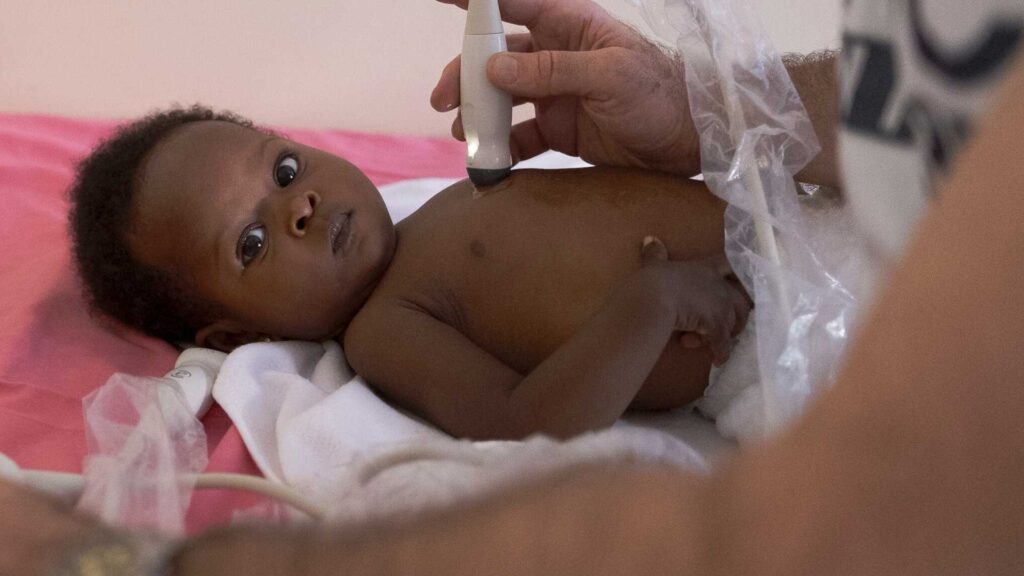
May 6
Ariella is safe. Now we need your help more than ever.
Ariella is safe. Now we need your help more than ever. Ariella was dying. Her condition is very serious. We went to Uganda and visited her.We found her in very serious condition—her life is in danger—and we decided to bring her to Italy, to the Giannina Gaslini Hospital in Genoa, for treatment. Help us! Donate five euros now. It’s a matter of life and death. Let’s give her a future. Surgery saved Ariella’s life. But the biggest challenge begins now. After healing her heart, we must find the strength to give her a future. You can be of great help to us in this. Find out how by clicking the link below. SPONSOR ARIELLA Ariella’s medical condition is dire. Ariella Matovu (date of birth: 10/07/2023) is a 7-month-old baby girl who has been under the care of the Uganda Heart Institute since shortly after her birth. Her condition was clear from the very beginning. Ariella is destined to die. She is in and out of hospitals as no child should ever have to be. The echocardiogram shows a transient atrioventricular canal defect. Ariella Matovu is ready for surgery so she can lead a normal, happy life—the life every child deserves. She’ll be in Italy in early June. But time is running out, and we need your support. Help us save Ariella’s life. Just 5 euros is enough. Help us now. CHECK OUT THE FUNDRAISER FOR ARIELLA ON GOFUNDME Listen to Ariella’s mother’s appeal https://youtu.be/Uy46DditamA This is truly a matter of life and death. Help us save her. Below, we’ll tell you who will be performing the surgery. THANKS TO YOUR SUPPORT, WE SAVE THE LIVES OF DOZENS OF CHILDREN EVERY YEAR. HELP US DO EVEN MORE. Countries 0 Children operated on 0 Children examined 0 + Ariella has undergone surgery. The procedure was a success, but there are complications. Ariella has undergone successful surgery, and her life has been saved after much suffering and worry due to her critical condition. The surgery is finally a cause for celebration. However, some concerning issues have come to light. Here are Dr. Michielon’s words: ’On Friday, I operated on Ariella Matovu for a complete atrioventricular canal defect. It was a complex procedure because she had abnormalities in both the right and left sides of her heart. Everything went well, and she’s already back on the ward.” However, we detected preoperative brain abnormalities on an MRI, most likely secondary to malnutrition. The child is clinically asymptomatic from a neurological standpoint. It would be helpful to repeat the brain MRI before discharge. Now more than ever, it’s essential to be there for her. Our collaboration with the Gaslini Institute in Genoa: Ariella will arrive in Italy on June 3 and will be taken to the Gaslini Institute in Genoa. The institute has been collaborating with the Open Heart project for many, many years and has helped us save dozens and dozens of children. Over the years, more than 60 children have escaped death thanks to this program, and the Giannina Gaslini Institute in Genoa is on the front lines with us to ensure these young lives are not lost. Here is the institute’s official website. https://www.gaslini.org/ Here are some questions you might be asking How will the donations be used? Every euro donated will go directly toward Ariella’s surgical needs. Our NGO operates with the utmost financial transparency, ensuring that every contribution has a direct impact on their lives. Who selects the recipients of the surgeries? The recipients—in this case, Jernita Ariella and Mary—are selected based on medical criteria and need. We’ve been collaborating with the doctors at Gaslini for years to ensure that resources go to those who need them most urgently. And by urgent, we mean life-threatening. Can I trust that the donations will be used properly? Absolutely. Every transaction is tracked, and every financial detail will be made available to anyone who wishes to have further information. POBIC has been operating in the nonprofit sector for over 30 years and considers honesty one of its core values. Check out all our TRANSPARENCY DOCUMENTS on the website. What is your track record in handling cases like these? We have a long history of success in providing life-saving care to children in similar situations. The success stories of the children we’ve helped are tangible proof of our commitment. Take a look at our story in Nigeria What happens if you don’t reach your fundraising goal? Even if we don’t reach the full goal, every donation brings us closer to our mission. Every euro counts and will help ensure a better future for Ariella. Can I make a donation even if I can’t give much? Absolutely! Every donation, regardless of the amount, makes a difference. Even small contributions can make a difference. Many small contributions, dear friend, add up to an enormous result. How will the project’s progress be communicated? We’ll regularly update our community through our social media channels. We want you to closely follow the progress you’re helping to make. And you can always visit this GoFundMe page for real-time updates on our progress. Learn more about us: The non-governmental organization POBIC was founded on September 28, 1992, as AnPobic, an acronym for the National Association for the Promotion of Charitable Works in Support of Civilian Disabled Persons. Its founders were Piras, Triesto, and Finetti, all from Brescia. In its early years, the organization focused on the issues facing civilians with disabilities in northern Italy. Paolo Federico Novellini became president on April 1, 1996, succeeding Giuseppe Lucchesi. Its first international initiative took place in 1999 in Kosovo with the delivery of clothing and food, and the association’s bylaws were amended for the first time to allow it to expand its activities abroad. The year 2001, meanwhile, saw exploratory missions to Ukraine, Morocco, and the Ivory Coast. READ THE FULL STORY HERE THANKS TO YOUR SUPPORT, WE SAVE THE LIVES OF DOZENS OF CHILDREN EVERY YEAR. HELP US DO EVEN MORE. Countries 0 Children operated on 0 Children examined 0 +
READ MORE
May 15
International Day of the Family
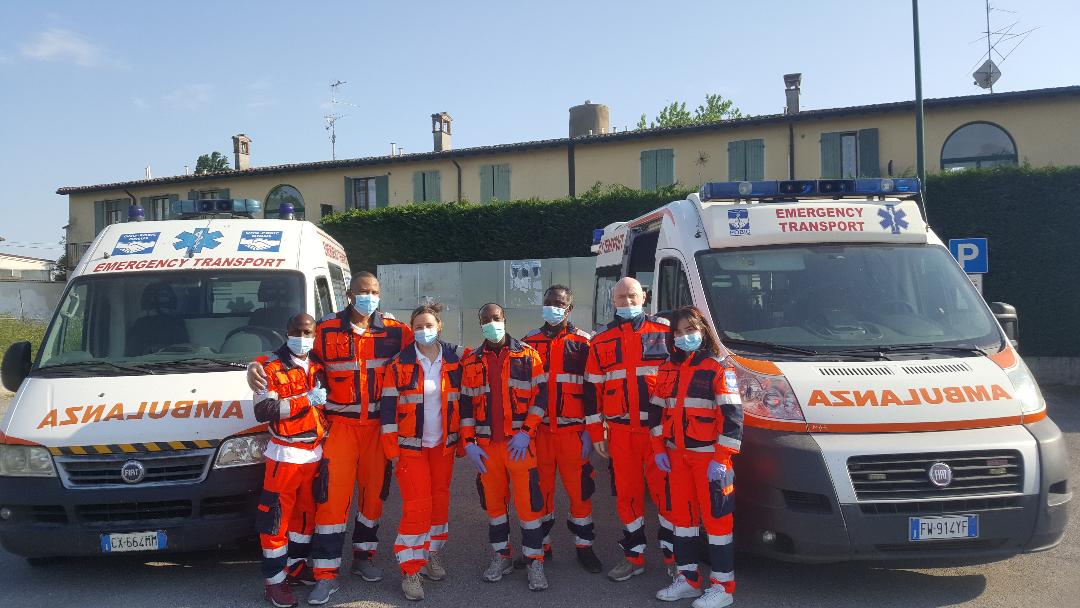
International Day of the Family 2023 The “International Day of the Family” is celebrated every year and provides an opportunity to reflect on the importance of the family as a fundamental social unit and the natural environment for the development and well-being of all its members, especially children. All children, all over the world. When is International Day of Families celebrated? In 1994, the United Nations General Assembly officially designated May 15 as a day to honor the fundamental role of the family as the primary social unit and natural environment for the development and well-being of its members, especially children. However, there are still many families around the world—especially in developing countries—facing serious social and economic problems that hinder their development and the well-being of their members. These problems often include poverty, lack of access to education and medical care, discrimination, violence, and the denial of fundamental human rights. International Day of Families: For All Families Around the World To help these children and their families, external nongovernmental organizations (NGOs) play a vital role. Through their work, NGOs can provide economic, health, educational, and psychological support to families in need, helping to ensure that children can grow up in a safe and secure environment. Often, NGOs also play an active role in safeguarding the health of children themselves, who otherwise would have no way to access adequate medical care. This care often makes the difference between life and death. An important role in promoting fundamental human rights. Through this work, they raise public awareness and promote the social, political, and economic change necessary to create a supportive environment for families. How International Family Day can truly become a global event. “International Family Day” is an important opportunity for reflection. The importance of the family as a fundamental social unit and the natural environment for the development and well-being of its members—especially children—is a global priority. We must remember that in many places, the need for our help is a reality we cannot turn our backs on. We are called to act to ensure that every family and every child can live in a safe, secure, and supportive environment conducive to their development. For over 30 years, POBIC has been active through the #emergencytransport and #openheart projects. Over 300 children examined. 56 children who underwent open-heart surgery. 12 countries where we operate. Your help is essential to continue this work. You can help us do more. Find out how to donate your 5×1000
READ MOREOPERATING HEADQUARTERS
- Registered office / operational office Via Romanino 1 25123 Brescia
- +39 0376920464
- ong-pobic@ong-pobic.org
CONTACTS
Registered/Operational office
Via Romanino 1
25123 Brescia
Tel - +39 0376-920464
Headquarters
V. Belfiore No. 9
Bozzolo (MN)
Operations Headquarters
Via Santa Maria in Conio, 10
35131 Padua PD
SUBSCRIBE TO THE NEWSLETTER
But let there be a nest in the velvet viverra bibendum in ac nisi. Even let the dui vitae sem
GALLERY




- ONG POBIC ODV