



Category Current events

May 1
May 1st: Labor Day, how it originated and why it concerns you
May 1: Labor Day—How It Came About and Why It Matters to You May 1 is celebrated around the world as Labor Day. What is the deeper meaning of this day? Is it really just a commemoration of past struggles? How does this holiday represent an opportunity to renew our commitment to those fighting for a better life? For us, as an NGO dedicated to emergency medical care and the treatment of children with serious heart conditions, May 1 is not just a date on the calendar—it serves as a reminder of our ongoing commitment to ensuring that every individual has access to quality medical care and a future full of hope. Why can we say that? Let’s explore this by looking back at the history of this special day. Keep reading to find out why today, May 1, we celebrate Labor Day and why it matters to all of us. THANKS TO YOUR SUPPORT, WE SAVE THE LIVES OF DOZENS OF CHILDREN EVERY YEAR. HELP US DO EVEN MORE. Countries 0 Children operated on 0 Children examined 0 + What is celebrated on May 1? May 1 is celebrated in many countries as Labor Day or International Workers’ Day. It is a day to commemorate workers’ struggles to achieve better working conditions, such as shorter work hours, workplace safety, and union rights. In many countries, May 1 is also a national holiday, with rallies, marches, and speeches to honor workers’ contributions and promote their rights. Why? Where did all this come from? HELP US DO EVEN MORE Every donation is essential to us. YOU CAN CONTRIBUTE TOO Why is May 1st Labor Day? May Day, known as International Workers’ Day or Labor Day, has its roots in the 19th-century labor movement. The date was chosen to commemorate significant events linked to workers’ struggles to secure better working conditions. One of the pivotal events that contributed to the emergence of May 1st was the Haymarket Riot, which took place in Chicago in 1886. During this demonstration, thousands of workers gathered to demand a reduction in the workday to eight hours. The demonstration ended tragically with a clash between the police and the demonstrators, during which violence broke out and casualties were reported. This tragic event marked the beginning of it all. How did May Day come about? Subsequently, the Socialist International, during its 1889 Congress in Paris, proclaimed May 1 as a day of international mobilization and protest by workers, in memory of the events in Chicago and to support the demands of workers around the world. Since then, May 1 has been recognized as International Workers’ Day and is celebrated as Labor Day in many countries around the world, with demonstrations, marches, speeches, and other activities aimed at promoting workers’ rights. Where is May 1 not celebrated? May 1 is not observed as a national holiday in every country around the world. Some countries do not consider May 1 an official holiday or celebrate it in any significant way.Let’s look at a few: United States: Although May 1st served as the starting point for labor celebrations in many countries, in the United States, Labor Day is observed on the first Monday in September. China: Although the Chinese government has recognized May 1 as a national holiday, public celebrations are not as widespread as in other countries. Japan: In Japan, May 1 is not a national holiday, although it may be observed by some labor unions or worker groups. Indonesia: Although some labor unions organize demonstrations or events for International Workers’ Day, May 1 is not an official national holiday. These are just a few examples, but it is important to note that the celebration of May 1 can vary even within individual countries depending on the political, social, and historical context. May 1: Labor Day and Its Lessons As the NGO POBIC, we reflect each year on how May 1 is not only a day to celebrate workers’ rights but also a time of solidarity and commitment to those fighting for a better life around the world. That is why our commitment to saving as many lives as possible—through both the OPEN HEART and EMERGENCY TRANSPORT projects—continues unabated every year. Just as the workers who gathered in Chicago in 1886 to demand better working conditions, we—as an NGO dedicated to providing emergency medical care and treatment for children with severe congenital heart defects—continue our mission to bring hope and care to the most vulnerable. Every day, in many parts of the world, children and their families face immense challenges, but through our commitment, we can offer them a chance at recovery and a better life. Our work is not only an act of assistance but also a tribute to past and present struggles for human rights and dignity. Together, we can transform pain into hope, and our efforts will continue to bring positive change to the lives of those we serve. And you can help—whether through donations or by giving food and clothing. Speaking of clothing, we’d like to tell you about our latest major project, launched in 2024. May 1: POBIC and Another Major Project In addition to all the hard work we’ve put in over the years, since 2024 POBIC has come to realize that simply establishing POBIC HOMES around the world isn’t enough. It’s not enough to simply take in women in need and their children. The most important decision concerns employment. Providing them with a
READ MORE
April 27
Russia-Ukraine War: A conflict we are forgetting (but more dramatic than ever)
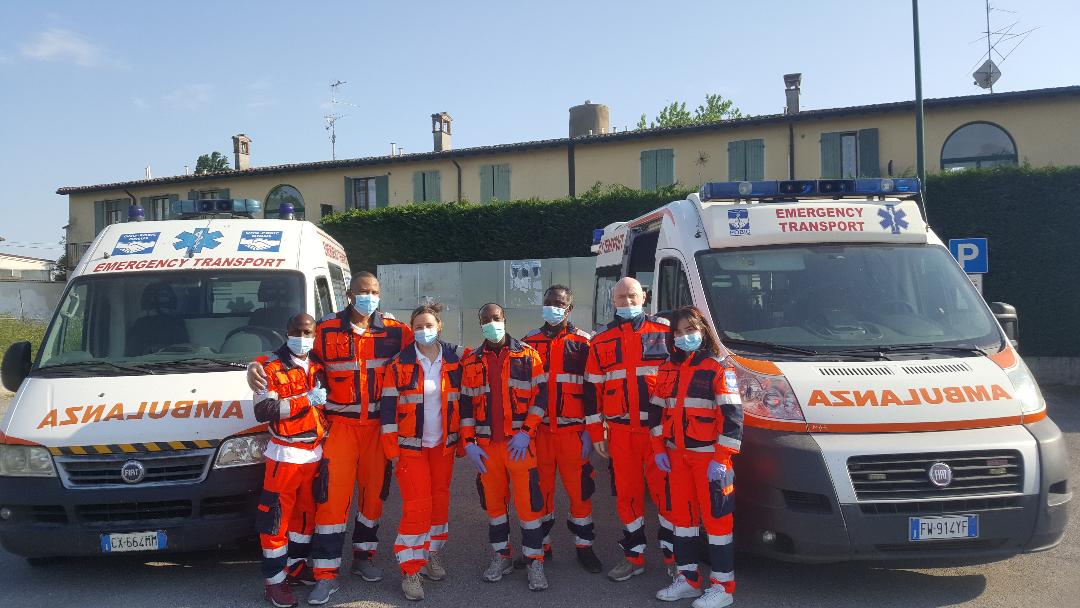
The Russia-Ukraine War: A Conflict We’re Forgetting (But One That’s More Dramatic Than Ever) The Ukraine-Russia War. What’s happening? Where did it all start? What can we do? These are just a few of the questions we ask ourselves regarding one of the most talked-about armed conflicts in recent years. In this article, we’ll answer them by giving you a glimpse into the current situation. Read it all the way through if you’d like to have your say on the matter. THANKS TO YOUR SUPPORT, WE SAVE THE LIVES OF DOZENS OF CHILDREN EVERY YEAR. HELP US DO EVEN MORE. Countries 0 Children operated on 0 Children examined 0 + What’s happening between Russia and Ukraine? Starting on Thursday, February 24, 2022, Russia launched a full-scale invasion of Ukraine, carrying out airstrikes, missile attacks, and ground assaults on several Ukrainian cities. This invasion is the latest escalation in an ongoing crisis between Russia and Ukraine that has been unfolding for years. HELP US DO EVEN MORE Every donation is essential to us. YOU CAN CONTRIBUTE, TOO Donbas: The Focus of the Russian Offensive Russian forces are concentrating their efforts in the Donbas, with the goal of capturing the entire Donetsk and Luhansk regions, which are controlled by pro-Russian separatists. Clashes are intensifying around the cities of Sloviansk, Kramatorsk, and Severodonetsk, where heavy shelling and close-quarters combat are taking place. The Russian advance is slow and arduous, facing strong resistance from Ukrainian troops, who are using their knowledge of the terrain to their advantage. Russia’s use of heavy artillery and missiles is causing extensive damage to cities and civilian infrastructure, resulting in numerous civilian casualties. Toward the South: Ukrainian Counteroffensive in Kherson In the south of the country, Ukrainian forces have launched a counteroffensive in the Kherson region, managing to recapture several cities previously occupied by the Russians. Fighting is concentrated in the city of Kherson, the regional capital, which remains under Russian control. The Ukrainian counteroffensive is aided by Western arms supplies, including Javelin and Stinger missiles, which allow for precision strikes against Russian tanks and other armored vehicles. The recapture of Kherson would represent a significant symbolic victory for Ukraine and could weaken Russia’s position in the south of the country. Bombings Across the Country Although attention is focused on the Donbas, Russia continues to bomb Ukrainian cities across the country, even those far from the conflict zones. These attacks indiscriminately target residential areas, schools, hospitals, and other civilian infrastructure, causing a civilian bloodbath and a severe humanitarian crisis. The hardest-hit cities include Kharkiv, Ukraine’s second-largest city; Mariupol, which has been almost completely razed; and Odessa, a major port on the Black Sea. Casualties and the Humanitarian Crisis The war in Ukraine has caused a dramatic humanitarian crisis, with millions of people displaced from their homes and thousands killed. According to UN estimates, over 12 million people have fled their homes in Ukraine, of whom about 5 million have become refugees in neighboring countries. The United Nations estimates that the number of civilian deaths is at least 6,000, but the actual figure could be much higher. The humanitarian situation in besieged cities such as Mariupol is particularly critical, with shortages of food, water, medicine, and medical care. A desperate situation: what we at POBIC are doing In the face of this dramatic situation, every effort is essential. Just consider that a city seemingly outside the conflict, such as Nemirov, has seen its social fabric devastated over the past year. The three ambulances available in this town of about 15,000 residents have been completely destroyed. The Bombed Ambulance This is what remains of the only ambulance in the city of Nemirov, Ukraine. A fragment of a Russian missile, partially destroyed by Ukrainian forces, fatally struck the emergency response vehicle. For a community like Nemirov, this is a very serious social tragedy. That is why, as Pobic, we have donated—on an emergency basis—an ambulance that had been decommissioned in Italy but remains fully operational. Professor Mikola Segeda, president of the Pobic Ukraine Foundation, has taken it upon himself to drive the vehicle to its destination. This is just the first step. The donated ambulance: Professor Mikola Segeda and Dr. Festus Adebayo, president of Pobic Nigeria-Ukraine: Pobic’s next step. If you’ve been following us for some time, you know of our deep connection with the Ukrainian people. Despite what you may hear on TV or social media, the situation is more dire than ever. The Pobic shelter set up in the Nemirov area is proving to be completely insufficient for the enormous number of displaced people who—having left their homes—are seeking safety by fleeing. We’re developing a plan to truly help during this crisis, which is shattering lives and turning a nation like Ukraine into a people without homes. A first step will be providing practical aid. We have purchased an additional ambulance to send to Ukraine, which will follow the one we had already sent a few months ago. The situation is terrible for our Ukrainian brothers and sisters. We are preparing something very important and will tell you about it soon. New ambulance donated by Pobic volunteers alongside attorney Paolo Novellini, president of Pobic, Mikola Segeda, and Giancarlo Nolli, head of the cooperatives. War between Ukraine and Russia: Future Prospects The outcome of the conflict remains uncertain. Russia has military superiority in terms of manpower and weaponry, but Ukraine has demonstrated strong resistance and determination to defend its country. The course of the war could depend on several factors, including the continued flow of Western weapons to Ukraine, changes in troop morale on both sides, and the possible escalation of the conflict into a broader war between Russia and NATO. Diplomats continue to seek a peaceful solution to the crisis, but no significant progress has been made so far. What really matters, however, is that we must and want to contribute
READ MORE
April 26
Israel and Palestine: The 5 Whys of the War
Israel-Palestine: The 5 Reasons Behind the War Israel and Palestine. Why the war? A conflict rooted in a history of tensions and a present that affects us all personally. Let’s try to shed some light on the situation and answer the question that most of all shapes our doubts. What are the reasons behind this terrible conflict? We’ll answer that in this article, striving to provide clarity while doing our best not to influence your judgment as you read. THANKS TO YOUR SUPPORT, WE SAVE THE LIVES OF DOZENS OF CHILDREN EVERY YEAR. HELP US DO EVEN MORE. Countries 0 Children operated on 0 Children examined 0 + What is the issue between Palestine and Israel? There is a diversity of perspectives globally on this sensitive topic, with individuals, organizations, and nations taking different stances regarding its future. Although international negotiations and mediation efforts have been attempted for years, there has not yet been a resolution satisfactory to both parties involved. To address this complex situation, a negotiation process that takes into account the aspirations and rights of all stakeholders would be necessary. Many support the idea of a solution based on two sovereign states—one being Israel and the other an independent Palestinian state—coexisting within internationally recognized borders and ensuring security for both populations. Ultimately, achieving peace in this region requires a commitment from all parties involved, as well as the support of the international community. The issue is extremely complex and sensitive, and finding a fair and lasting solution remains a challenging goal. HELP US DO EVEN MORE Every donation is essential to us. YOU CAN HELP TOO What is the root cause of the conflict between Jews and Palestinians? Having made this necessary introduction, let’s now try to identify some of the reasons that lead us to discuss this topic today and why the dramatic situation that concerns us all has such deep historical roots. 1. Israel, Palestine, and Jerusalem: The war in Gaza is linked to Jerusalem—or, more specifically, to the tensions surrounding Jerusalem’s Old City and the holy sites located there. Jerusalem is a city of great religious significance for Jews, Muslims, and Christians, and its sovereignty has been the subject of disputes and conflicts for decades. The Gaza war has often been triggered by events related to Jerusalem, such as disputes over the custody of holy sites, the demolition of Palestinian homes in the city, plans to expand Israeli settlements in East Jerusalem, and Palestinian protests against these actions. These events have sparked violence and tensions that have then spread to the Gaza Strip, with attacks from both sides and cycles of violence that have caused human suffering and destruction. 2. Israel, Palestine, and Israeli Settlements Israeli settlements are communities built by Israeli citizens in territories occupied since the 1967 war, including the West Bank and East Jerusalem. These settlements are considered illegal by most of the international community and are one of the most controversial issues in the Israeli-Palestinian conflict. Controversies surrounding Israeli settlements include control over land, resources, and urban development, as well as the right of Palestinians to a future independent state. Policies expanding Israeli settlements in the West Bank and East Jerusalem have often sparked tensions and conflicts with Palestinians. The demolition of Palestinian homes to make way for Israeli settlements, along with the construction of security barriers and roads reserved for Israelis, has been a source of deep anger and frustration among Palestinians, fueling the cycle of violence that can escalate into wars such as the one in Gaza. 3. Israel, Palestine, and Palestinian Refugees The issue of Palestinian refugees is one of the central issues of the Israeli-Palestinian conflict, stemming from the 1948 Arab-Israeli War and subsequent regional conflicts. During this war and in its aftermath, hundreds of thousands of Palestinians were forced to flee or were expelled from their homes, giving rise to a large refugee population. Many of these refugees and their descendants still lack a definitive solution to their status and live in refugee camps in the Gaza Strip, the West Bank, Jordan, Lebanon, and Syria, as well as in other countries. The situation of Palestinian refugees has been a constant source of tension and distress in the Israeli-Palestinian conflict, fueling resentment and despair among Palestinians. In the context of the Gaza war, the situation of Palestinian refugees may be one of the many causes of tension and anger that lead to violence and armed conflict. The difficult living conditions in the refugee camps, combined with the lack of prospects for a political solution to the refugee problem, can fuel despair and a propensity toward radicalization and armed resistance. 4. Israel, Palestine, and Territorial Claims The Gaza Strip is an integral part of the Palestinian territory disputed in the Israeli-Palestinian conflict. Territorial disputes primarily concern sovereignty and control over the Gaza Strip, as well as its border with Israel. The Gaza Strip has been at the center of conflict for decades, with Israel having occupied the Gaza Strip from 1967 until 2005, when it unilaterally withdrew but retained control over its borders, airspace, and territorial waters. This Israeli control, along with the naval and land blockade imposed by Israel on Gaza, has drastically restricted the freedom of movement and trade for Palestinians in the region. Territorial claims also concern the issue of Israeli settlements in the West Bank, which extend to the borders of the Gaza Strip. Israel’s policies of settlement expansion and the construction of security barriers have contributed to increased territorial tensions and further restricted the living space available to Palestinians.
READ MORE
April 26
Rheumatic diseases in Africa: a health challenge starting with humanitarian aid
Rheumatic Diseases in Africa: A Public Health Challenge That Begins with Humanitarian Aid Rheumatic diseases remain one of the major public health emergencies in sub-Saharan African countries, particularly in the Horn of Africa and in nations such as Ghana, where the healthcare system struggles to ensure timely diagnosis and treatment. Humanitarian aid therefore plays a vital role in addressing an issue that is often underestimated but has devastating effects on the population, especially among the youngest. THANKS TO YOUR SUPPORT, WE SAVE THE LIVES OF DOZENS OF CHILDREN EVERY YEAR. HELP US DO EVEN MORE. Countries 0 Children operated on 0 Children examined 0 + What Are Rheumatic Diseases? Rheumatic diseases are inflammatory conditions that can affect joints, bones, muscles, and, in more severe cases, vital organs such as the heart. In Africa, the most common form is rheumatic fever, a complication of streptococcal infections that are not treated properly. If not diagnosed and treated in time, rheumatic fever can progress to rheumatic heart disease, causing irreversible damage to the heart valves. According to the World Health Organization (WHO), rheumatic heart disease is responsible for over 300,000 deaths worldwide each year, primarily affecting children and young adults in low-income countries. HELP US DO EVEN MORE Every donation is essential to us. YOU CAN CONTRIBUTE, TOO The impact of rheumatic diseases in Africa In the Horn of Africa and in many parts of Africa in general, rheumatic fever remains one of the leading causes of heart failure in young people. This is due to several reasons: Late or absent diagnoses. A shortage of antibiotics to treat streptococcal infections. Low health awareness among rural populations. Humanitarian aid in East Africa is increasingly focusing on primary prevention programs (timely treatment of infections) and secondary prevention (early diagnosis of heart damage). Furthermore, the strong correlation between poverty, lack of access to care, and the spread of infections makes the problem even more difficult to curb without the support of humanitarian aid organizations. Horn of Africa: A Highly Vulnerable Context The Horn of Africa, one of the continent’s most fragile regions, is characterized by many of the conditions that favor the spread of rheumatic diseases: Widespread poverty. Limited access to basic health services. Overcrowding in schools and housing, which facilitates the transmission of infections. In these contexts, humanitarian aid is no longer limited to emergency response but aims to build sustainable public health programs capable of identifying risks early and reducing the incidence of cardiac complications. Investing in the prevention of rheumatic fever in the Horn of Africa means not only saving lives but also alleviating the burden on national health systems, thereby improving the resilience of the most vulnerable communities. Conclusion Rheumatic diseases in Africa, and particularly in the Horn of Africa, represent a major public health challenge that is still too often overlooked. Humanitarian aid plays an essential role in promoting strategies for the prevention, early diagnosis, and treatment of infections that lead to serious cardiac complications. Addressing this emergency means looking beyond individual interventions and focusing on sustainable projects capable of structurally improving public health in the most fragile regions. This is what remains of the only ambulance in the city of Nemirov, Ukraine. A fragment of a Russian missile, partially destroyed by Ukrainian forces, fatally struck the emergency response vehicle. For a community like Nemirov, this is a very serious social tragedy. That is why, as Pobic, we have donated—on an emergency basis—an ambulance that had been decommissioned in Italy but remains fully operational. Professor Mikola Segeda, president of the Pobic Ukraine Foundation, has taken charge of driving the vehicle to its destination. This is just the first step. HELP US DO EVEN MORE Every donation is essential to us. YOU CAN CONTRIBUTE, TOO
READ MORE
April 25
April 25: A day to give hope
April 25: A Day to Give Hope April 25, 1945: a date that marked Italy’s liberation from Nazism and Fascism, a day that celebrates the triumph of freedom and democracy. A pivotal day. And, if possible, a day to reflect not only on the past but also on the present. What happened on April 25, 1945? April 25, 1945, is not just a date on the calendar, but a day that forever changed Italy’s destiny. On that day, in fact, the country awoke free from the Nazi-Fascist yoke, thanks to the general uprising coordinated by the CLNAI. The cities of northern Italy, from Milan to Turin, were transformed into battlefields, where partisans and courageous citizens fought strenuously against the occupying forces. The sacrifice of thousands of men and women was immense, but their determination and their love of freedom prevailed. The liberation on April 25 marked the beginning of a new era for Italy—an era of democracy, justice, and reconstruction. It is a day that still stands today as a symbol of hope and rebirth, a reminder to cherish and defend the values of freedom and to build a better future for all. April 25: A Day to Give Hope April 25, 1945: a date that marked Italy’s liberation from Nazism and Fascism, a day that celebrates the triumph of freedom and democracy. For many children around the world, freedom is still a distant dream. They are born into situations of poverty and war, where access to medical care is a privilege reserved for the few. Among these medical needs are treatments for congenital heart defects, which are often fatal if not treated in time. That is why April 25 is an important day for us at POBIC: because it is a day to remember that freedom is not only a right, but also a duty. The duty to fight for a world in which all children, regardless of where they are born or who they are, have the chance to live a healthy and happy life. We at POBIC do this every day, working in developing countries to provide life-saving surgeries to children with congenital heart defects. Doctors and nurses collaborate with dedication and professionalism, donating their time and expertise to give these children a future. But healing hearts isn’t enough. We also welcome refugees fleeing conflict, offering them a safe haven and the chance to rebuild their lives. April 25 reminds us that freedom is a precious gift, one to be cherished and shared. That is why we invite all of you to join us in this mission of hope. With a donation—even a small one—you can help save a child’s life and give them a better future. Together, we can build a world where freedom and health are everyone’s rights. Because a child’s freedom is the hope for a better world. Find out how to donate your 5×1000
READ MOREOPERATING HEADQUARTERS
- Registered office / operational office Via Romanino 1 25123 Brescia
- +39 0376920464
- ong-pobic@ong-pobic.org
CONTACTS
Registered/Operational office
Via Romanino 1
25123 Brescia
Tel - +39 0376-920464
Headquarters
V. Belfiore No. 9
Bozzolo (MN)
Operations Headquarters
Via Santa Maria in Conio, 10
35131 Padua PD
SUBSCRIBE TO THE NEWSLETTER
But let there be a nest in the velvet viverra bibendum in ac nisi. Even let the dui vitae sem
GALLERY




- ONG POBIC ODV