Rheumatic diseases in Africa: a health challenge starting with humanitarian aid
Rheumatic diseases still represent one of the main health emergencies in sub-Saharan Africa today, particularly in the Horn of Africa and in nations like Ghana, where the healthcare system struggles to guarantee timely diagnosis and treatment. Humanitarian aid therefore plays a fundamental role in addressing an issue that is often underestimated, but has devastating effects on the population, especially among the youngest.
THANKS TO YOUR SUPPORT
WE SAVE THE LIVES OF DOZENS OF CHILDREN EVERY YEAR.
HELP US DO EVEN MORE.
Countries
0
Children operated on
0
Children visited
0+
What are rheumatic diseases
Rheumatic diseases are inflammatory conditions that can affect joints, bones, muscles, and, in more severe cases, vital organs such as the heart.
In Africa, the most widespread form is rheumatic fever, a complication of inadequately treated streptococcal infections. Rheumatic fever, if not diagnosed and treated in time, can evolve into rheumatic heart disease, causing irreversible damage to the heart valves.
According to the World Health Organization (WHO), the rheumatic heart disease is responsible for over 300,000 deaths each year globally, and it mainly affects children and young adults in low-income countries.
HELP US TO DO MORE AND MORE
Every donation is crucial to us.
CAN YOU CONTRIBUTE YOU TOO
The impact of rheumatic diseases in Africa
In Horn of Africa and in many areas of Africa in general, rheumatic fever remains one of the leading causes of heart failure in young people. This happens for several reasons:
Late or nonexistent diagnoses.
Shortage of antibiotics to treat streptococcal infections.
Poor health awareness in rural populations.
He humanitarian aid nEast Africa, is increasingly orienting itself towards programs of primary prevention (timely treatment of infections) and secondary prevention (early diagnosis of heart damage).
Furthermore, the strong correlation between poverty, lack of access to healthcare, and the spread of infections makes the phenomenon even harder to contain without the support of organizations humanitarian aid.
Horn of Africa: a context of high vulnerability
He Horn of Africa, one of the most fragile regions on the continent, concentrates many of the conditions that favor the spread of rheumatic diseases:
Widespread poverty.
Limited access to basic healthcare services.
School and housing overcrowding, which facilitates the transmission of infections.
In these contexts, the humanitarian aid it is no longer limited to emergency response, but aims to build sustainable public health programs capable of early risk detection and reducing the incidence of cardiac complications.
Investing in the prevention of rheumatic fever in Horn of Africa means not only saving human lives, but also easing the burden on national health systems, improving the resilience of the most vulnerable communities.
Conclusion
The rheumatic diseases in Africa, and in particular in Horn of Africa, represent a major health challenge, still too often overlooked.
He humanitarian aid it plays an essential role in promoting strategies for the prevention, early diagnosis, and treatment of infections that are the origin of serious cardiac complications.
Addressing this emergency means looking beyond the single intervention, focusing on lasting projects capable of structurally improving public health in the most vulnerable areas.
This is what remains of the only ambulance in the city of Nemirov, Ukraine.
A part of a Russian missile, partially destroyed by Ukrainian forces, fatally crashed into the emergency rescue vehicle. For a community like Nemirov, a very serious social tragedy.
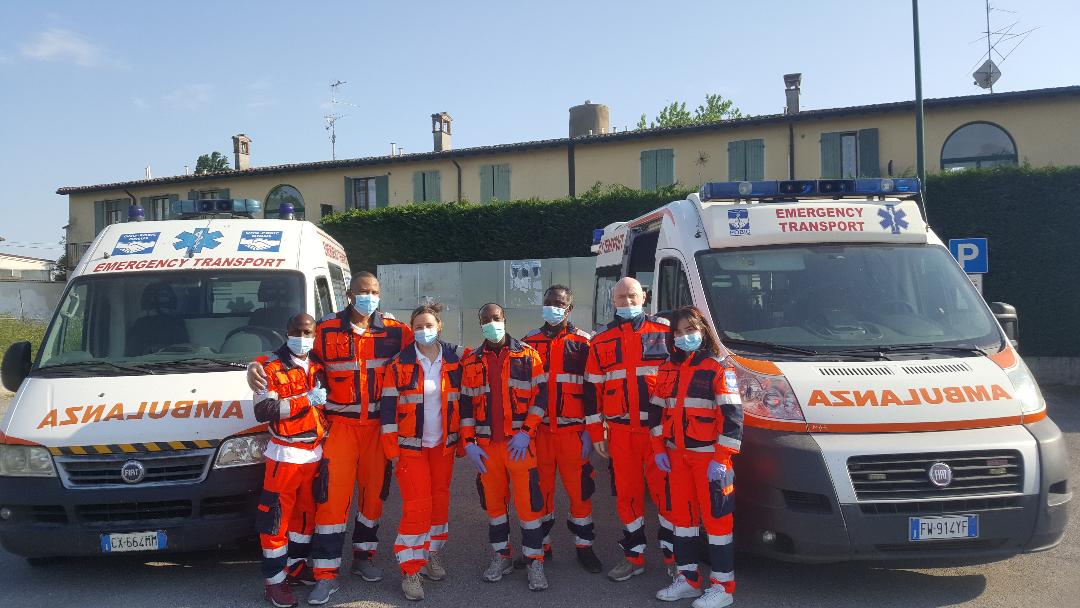
This is why, as Pobic, on a purely emergency basis, we donated an ambulance that was decommissioned in Italy, but remains fully functional. Professor Mikola Segeda, president of the Pobic Ukraine Foundation, took it upon himself to drive the vehicle to its destination.
Marketer and professor of communication and marketing, sensitive to humanitarian and relief issues. I only write about what truly interests me, and POBIC's mission is of crucial importance.