


Category Nigeria
10 Oct
From Nigeria to Gaslini: Praise operated on the heart with the support of Pobic
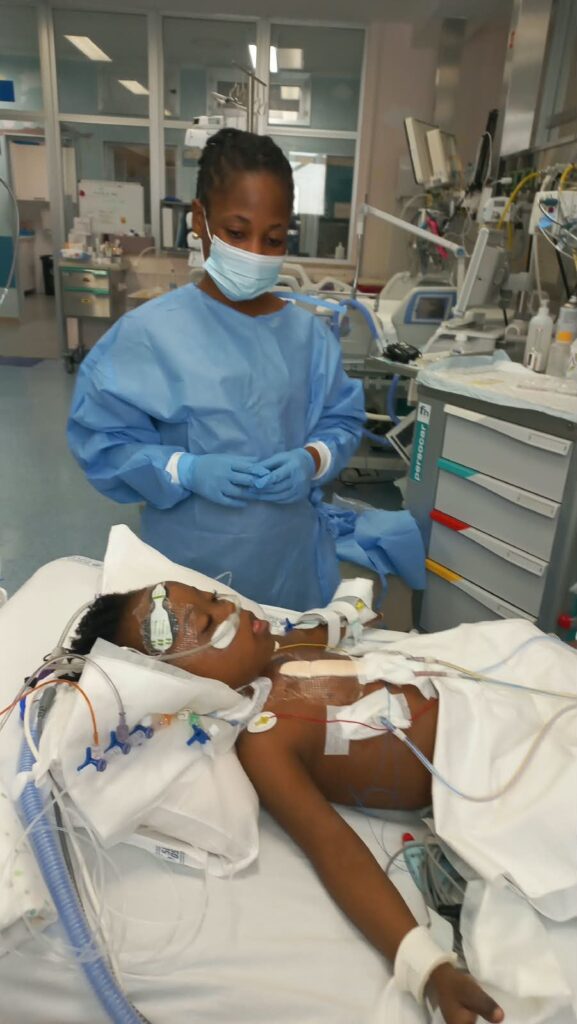
From Nigeria to Gaslini: Praise underwent heart surgery with the support of Pobic. Three years, a journey from Nigeria to Italy and a path of care for congenital heart disease. On September 28, 2026, Praise underwent heart surgery at the Gaslini Hospital in Genoa. The Pobic ETS Foundation continues to support him and his family. For a child who needs cardiac care, getting to the hospital is a crucial step. When those treatments require a trip to another country, the journey begins long before the intervention. This is the story of Praise, a three-year-old Nigerian boy who arrived at Malpensa Airport on September 7, 2026, to undergo an important course of treatment at the Gaslini Hospital in Genoa. At his side, the Pobic ETS Foundation, which accompanies him along with his family. Praise’s journey and the heart surgery Praise has Down syndrome and congenital heart disease with a septal defect, indicated in the documentation received as CIV. His arrival in Italy allowed the start of the evaluation and treatment process at Gaslini, leading to the heart surgery on September 28, 2026. This was an important and delicate moment for him and his family. It is a milestone that illustrates the importance of being able to access the necessary care and having someone by your side during the journey. Pobic’s commitment continues after the surgery, maintaining support for Praise and his family. Pobic and access to care for children with heart diseases The story of Praise gives a concrete face to Pobic’s commitment to children with heart problems. Through the Open Heart project, Pobic supports access to care for children with severe heart diseases, accompanying them towards specialist interventions. Behind every path there is a child, a family and the need to face complex steps with concrete support. For Praise, this means being accompanied away from home during a particularly delicate phase of their life. THANK YOU FOR YOUR SUPPORT, WE SAVE LIVES OF DOZENS OF CHILDREN EVERY YEAR. HELP US DO MORE EVERY TIME. Countries 0 Children operated 0 Children visited 0 +
READ MORE
December 5
POBIC and Down Syndrome Foundation Nigeria embark on a new collaboration
POBIC and the Down Syndrome Foundation Nigeria Launch a New Partnership The Italian foundation POBIC met with the Down Syndrome Foundation Nigeria to launch a cooperation project dedicated to people with Down syndrome. The Italian foundation POBIC recently met with representatives of the Down Syndrome Foundation Nigeria at the Nigerian organization’s headquarters in Lagos. The meeting marks the start of a new international partnership in the field of support for people with Down syndrome. The Situation Regarding Down Syndrome in Nigeria According to epidemiological studies, the incidence of Down syndrome in Nigeria is 1 case per 865 live births. These data come from research conducted over a 9-year period in Nigerian hospitals. Cytogenetic analysis of 386 patients showed that 95.5% of cases are due to regular trisomy 21. However, experts emphasize that the actual figures may be higher. Most births in Nigeria take place in non-conventional settings such as churches and traditional facilities that do not keep records. Furthermore, many cases go unreported for statistical purposes due to traditional beliefs that associate congenital malformations with superstitions. Challenges in the Health and Social Care System Mrs. Rose Mordi, President of the Down Syndrome Foundation Nigeria, has identified two main issues: stigmatization and exclusion from the country’s health care support system. According to public interviews, many parents hide their children with Down syndrome due to shame or fear of discrimination. The Nigerian healthcare system has significant limitations in providing care for people with Down syndrome. Many children are born with congenital heart defects that require corrective surgery. She stated that sending a patient abroad for heart surgery can cost over 10 million naira, an amount that is unaffordable for most Nigerian families. Challenges that limit early diagnosis and the collection of accurate data include: Limited healthcare facilities offering prenatal screening services; a shortage of professional healthcare workers; weak data management and registration systems; and fears, misconceptions, or beliefs about testing and disability High costs and transportation issues Limited access to education and services People with Down syndrome in Nigeria face difficulties in accessing inclusive education. The Down Syndrome Foundation Nigeria operates a residential support center where it provides specialized education to children. According to Mrs. Rose Mordi, integration into mainstream schools remains problematic due to persistent stigma. The organization has highlighted that stigmatization manifests itself through cultural prejudices, social exclusion, and, in some cases, religious discrimination. In some rural Nigerian communities, intellectual disabilities are still perceived as misfortunes or divine punishments. The Legal Framework According to the Down Syndrome Foundation Nigeria, people with Down syndrome in Nigeria are generally not recognized as legal persons, which means that their legal capacity can be revoked simply because they have Down syndrome. Although laws exist that nominally prohibit discrimination against people with disabilities, enforcement of these laws remains weak or largely unnoticed. The Role of the Down Syndrome Foundation Nigeria The Down Syndrome Foundation Nigeria was founded in 2001 as a non-governmental, apolitical, and nonprofit organization. The organization operates through affiliations with Down Syndrome International, Inclusion International, the African Down Syndrome Network, and the Africa Disability Forum. The foundation provides support to people with Down syndrome and intellectual disabilities, creating a community that includes parents, guardians, caregivers, and other stakeholders. Services include educational programs, therapies, and public awareness campaigns to reduce stigma. In recent years, the organization has formed partnerships with entities such as the Lagos State Health Management Agency (LASHMA) to expand access to healthcare, and with Cummins West Africa Ltd. for projects aimed at empowering people with disabilities. POBIC’s Experience in Africa The POBIC Foundation is an Italian NGO with many years of experience in healthcare projects in Africa. The foundation has carried out missions in Nigeria, Uganda, and Ghana, focusing primarily on cardiac surgery through its “Open Heart” projects. POBIC’s activities in Nigeria date back at least to 2015, when the organization conducted training sessions on cardiopulmonary resuscitation for doctors at the Federal Medical Center in Yenagoa. In the past, POBIC has facilitated surgical procedures for Nigerian children at Italian hospitals such as the Gaslini Hospital in Genoa. The New Partnership The meeting between POBIC and the Down Syndrome Foundation Nigeria marks the beginning of a cooperative project designed to integrate POBIC’s medical expertise and international networks with the Down Syndrome Foundation’s local experience and knowledge of the Nigerian context. The operational details of the collaboration are currently being finalized, but the stated goal is to improve access to specialized medical care for people with Down syndrome in Nigeria, with a particular focus on congenital heart conditions that frequently affect this population. Future Outlook According to experts, life expectancy for people with Down syndrome in Africa is beginning to rise thanks to improvements in access to healthcare. This makes the need to develop adequate and sustainable support systems increasingly urgent. The identified priority areas for action include: Improving access to quality healthcare Early diagnosis and treatment Inclusive education Awareness programs for healthcare providers, educators, and the general public Strengthening protection and inclusion policies The collaboration between POBIC and the Down Syndrome Foundation Nigeria is part of this effort, with the goal of contributing to the development of a more accessible and inclusive care model for people with Down syndrome in Nigeria. THANKS TO YOUR SUPPORT, WE SAVE THE LIVES OF DOZENS OF CHILDREN EVERY YEAR. HELP US DO EVEN MORE. Countries 0 Children operated on 0 Children examined 0 +
READ MORE
May 1
Open Heart Nigeria: The Story of Destiny and Her Rebirth
Open Heart Nigeria: Destiny’s Story and Her Rebirth A little girl, a fragile heart, a slender thread of hope. Destiny is a Nigerian girl born on December 7, 2020, in Bayelsa State. A name that, from the very beginning, seemed to tell a story greater than herself. A story of fragility, courage, and rebirth. From Nigeria to Italy, a life-changing journey. We met her in 2023, during one of the Open Heart project’s missions, at a time when the paths of Nigeria and Italy intersect to save small but precious lives. That year was special for Pobic: we forged crucial institutional ties with the governor of Bayelsa State, Douye Diri, and strengthened our collaboration with two key hospitals—the Federal Medical Center in Yenagoa and the Niger Delta University Teaching Hospital in Okolobiri. It was in this context, during a screening session in collaboration with the Giannina Gaslini Hospital in Genoa, that Destiny crossed our path. Her ailing heart struggled to sustain her breathing. Every heartbeat was a cry for help. A new destiny, a fresh start. On September 23, 2023, Destiny arrived in Italy. She was fragile, in limbo. Her life seemed to hang by a thread. But that thread held. On October 6, she underwent surgery. A few days later, on October 26, she was discharged. She was breathing on her own. She was smiling. She was alive, in the fullest sense of the word. Today, Destiny has returned home to Nigeria. And we are here, with the light of that moment—when destiny changed course—still shining in our eyes. This is also what the Open Heart project is about: building connections across borders, creating possibilities where there seemed to be none, and offering a future where the present is uncertain. And when a little girl named Destiny starts breathing again, it’s impossible not to feel that everything has meaning. Because every life saved is a destiny rewritten. And every rewritten destiny is a new beginning. THANKS TO YOUR SUPPORT, WE SAVE THE LIVES OF DOZENS OF CHILDREN EVERY YEAR. HELP US DO EVEN MORE. Countries 0 Children operated on 0 Children examined 0 +
READ MORE
March 26
A Heart for Nigeria – Historic agreement signed with UCH of Ibadan
A Heart for Nigeria – Historic Agreement Signed with UCH in Ibadan Some milestones don’t happen overnight. They follow the slow, steady rhythm of things that grow with care, step by step. And there are signatures that, when set on paper, carry the weight of milestones in a project’s history. Today, March 17, is one of those days. The memorandum of understanding between POBIC and UCH in Ibadan—Nigeria’s leading university hospital—is now a reality. A five-year collaboration agreement in the field of pediatric cardiac surgery, signed in the presence of POBIC President Paolo Novellini, Dr. Festus Adedayo, and Nigerian health authorities, Prof. Jesse Abiodun Otegbayo, Director General of UCH, and Prof. Olubukola Adeponle Adesina, Chair of the Medical Advisory Committee. But this is not just a news item. It is the culmination of a story that began a long time ago. The First Steps on a Long Journey It all began in 2016, with POBIC’s first missions to Nigeria. On those early, courageous expeditions, Italian medical teams left Italy to operate on children with congenital heart defects in extremely challenging healthcare settings. These were exploratory missions, full of unknowns, but driven by one certainty: every child saved was worth the journey. The University Teaching Hospital in Enugu was the first partner hospital. From there, over time, stable partnerships developed with facilities such as the Federal Medical Center in Yenagoa and the Niger Delta University Teaching Hospital in Okolobiri. Surgeries, training sessions, workshops, volunteers, departures, returns: the engine of solidarity has never stopped. LONG-DISTANCE ADOPTION: A Heart Across the Sea When heart conditions were too complex to be treated in Nigeria, POBIC took charge of transferring the young patients to Italy, to the Gaslini Institute in Genoa. Thus, over the years, Michael, Yusuf, Jesse, Daniel, Treasure, Salim, Diane, Jed, Simon, Aleeson, and many others crossed the sea to receive a second chance. The long-distance sponsorship program was created precisely to accompany them over time, ensuring not only medical care but also educational continuity and family support. Because, after all, healing also means being able to grow. A welcoming home, a needle that sews Meanwhile, in Yenagoa, Casa POBIC was established: a facility where care, protection, and education intertwine. Here, young women who have been victims of violence or marginalization receive support, a welcoming environment, and above all, the tools to reclaim their lives. Among these, the most precious is autonomy. The tailoring training program has become a symbol of redemption. In this land, sewing is not just a trade: it is art, dignity, and independence. It is the thread with which a new life is sewn together. Recognition from Institutions All of this has caught the attention of Nigerian authorities. The Minister of Health wrote to the Italian government, praising POBIC’s work and requesting that the project continue and be strengthened. READ ABOUT POBIC’S JOURNEY IN NIGERIA YEAR BY YEAR The Governor of Bayelsa State has also officially recognized the value of the work carried out, describing the initiative as a virtuous example of cooperation among peoples. The Day We’ve Been Waiting For And here we are today. After years of work on the ground, POBIC has signed an agreement with UCH in Ibadan, one of Nigeria’s most prestigious hospitals. This is not just a formal act: it is a mutual promise. A shared vision aimed at creating a functional, stable, and educational pediatric cardiac surgery unit capable of restoring health and a future to hundreds of children. A project that now has deeper roots and broader horizons. This signing does not close a chapter. It opens one. It confirms that every child saved so far was not an isolated act, but part of a greater mission. And today, that heart that beat strongly in Enugu, Genoa, and Yenagoa is beginning to beat in Ibadan as well. The future has only just begun. THANKS TO YOUR SUPPORT, WE SAVE THE LIVES OF DOZENS OF CHILDREN EVERY YEAR. HELP US DO EVEN MORE. Countries 0 Children operated on 0 Children examined 0 +
READ MORE
January 14
The Stories of Tehila and Joshua: A Journey of Hope from Nigeria to Italy
The Stories of Tehila and Joshua: A Journey of Hope from Nigeria to Italy In Nigeria, a country rich in culture and resources but marked by deep inequalities, childhood can be a daily challenge. For children with disabilities or complex medical conditions, like Tehila and Joshua, these challenges become even more daunting. Tehila: A Smile Despite the Hardships Tehila is a 7-year-old girl born in a rural village in southern Nigeria. Since birth, she has lived with Down syndrome, a genetic condition that, in a context like Nigeria’s, presents additional obstacles. In many communities, disability is often misunderstood, leading to stigma and social isolation. Limited resources and a lack of adequate facilities make it difficult to access medical care and specialized educational programs. Despite these challenges, Tehila has shown extraordinary resilience. Her infectious smile and innate curiosity have made her beloved by her family and everyone she meets. However, a congenital heart defect seriously threatened her health and her future. In a country where healthcare is often inaccessible to low-income families, Tehila’s hopes seemed to be fading. SPONSOR A CHILD: Joshua—A Brave Heart in Search of Healing Joshua, 8, comes from an urban community in the Niger Delta region. His childhood has been marked by a heart defect that prevented him from participating in activities typical for children his age. In Nigeria, access to specialized care is limited, and families often face prohibitive costs for life-saving medical treatments. Despite their financial difficulties, Joshua’s family desperately sought a solution to his heart condition, fearing for his life and his future. A Bridge of Hope: From Africa to Europe Tehila and Joshua’s stories took a positive turn thanks to the intervention of the POBIC association and the “Open Heart” project. This program aims to identify children with congenital heart defects in countries with fragile healthcare systems, offering them the opportunity to receive appropriate care. For Tehila and Joshua, this meant a trip to Italy, where they were welcomed and underwent surgery at the Gaslini Hospital in Genoa, a state-of-the-art facility for the treatment of pediatric diseases. Moving to a foreign country, encountering a new culture, and undergoing complex surgeries were moments that required great courage for both children. Having their mothers by their sides throughout this journey was essential, providing emotional support and unconditional love. A Bright Future on the Horizon Following their surgeries, both Tehila and Joshua have shown remarkable progress. Tehila, with her lively spirit, has begun to explore the world with renewed energy, while Joshua dreams of returning to play soccer with his friends, free from the limitations that have held him back until now. The success of their surgeries not only improves their quality of life but also serves as a message of hope for many other families in similar situations. The Crucial Role of Community Support Tehila and Joshua’s experiences remind us that, despite the difficulties, every child deserves a chance at a healthy and happy future. We invite everyone to support projects like “Open Heart” and the POBIC association, so they can continue to offer hope and care to many other children around the world. Active participation and community support are essential to ensuring that stories like those of Tehila and Joshua can be repeated, transforming lives and building bridges of global solidarity. DONATE NOW / ADOPT NOW A Call to Action Following their surgeries, both Tehila and Joshua have shown remarkable progress. Tehila, with her lively spirit, has begun to explore the world with renewed energy, while Joshua dreams of returning to play soccer with his friends, free from the limitations that have held him back until now. The success of their surgeries not only improves their quality of life but also serves as a message of hope for many other families in similar situations. Where the surgeries were performed The children will undergo surgery at the Gaslini Hospital in Genoa. The hospital has been collaborating with the Open Heart project for many years and has helped us save dozens and dozens of children. Over the years, more than 60 children have been saved from death thanks to this program, and the Giannina Gaslini Hospital in Genoa is on the front lines with us to ensure these young lives are not lost. Here is the hospital’s official website. https://www.gaslini.org/ Here are some questions you might be asking How will the donations be used? Every euro donated will go directly toward Ariella’s surgical needs. Our NGO operates with the utmost financial transparency, ensuring that every contribution has a direct impact on their lives. Who selects the recipients of the surgeries? The recipients—in this case, Jernita Ariella and Mary—are selected based on medical criteria and need. We’ve been collaborating with the doctors at Gaslini for years to ensure that resources go to those who need them most urgently. And by urgent, we mean life-threatening. Can I trust that the donations will be used properly? Absolutely. Every transaction is tracked, and every financial detail will be made available to anyone who wishes to have further information. POBIC has been operating in the nonprofit sector for over 30 years and considers honesty one of its core values. Check out all our TRANSPARENCY DOCUMENTS on the website What is your track record in handling cases like these? We have a long history of success in providing life-saving care to children in similar situations. The success stories of the children we’ve helped are tangible proof of our commitment. Take a look at our work in Nigeria What happens if you don’t reach your fundraising goal? Even if we don’t reach the full goal, every donation brings us closer to our mission. Every euro counts and will help ensure a better future. Can I make a donation even if I can’t give much? Absolutely! Every donation, regardless of the amount, makes a difference. Even small contributions can make a difference. Many
READ MORE
April 26
Rheumatic diseases in Africa: a health challenge starting with humanitarian aid
Rheumatic Diseases in Africa: A Public Health Challenge That Begins with Humanitarian Aid Rheumatic diseases remain one of the major public health emergencies in sub-Saharan African countries, particularly in the Horn of Africa and in nations such as Ghana, where the healthcare system struggles to ensure timely diagnosis and treatment. Humanitarian aid therefore plays a vital role in addressing an issue that is often underestimated but has devastating effects on the population, especially among the youngest. THANKS TO YOUR SUPPORT, WE SAVE THE LIVES OF DOZENS OF CHILDREN EVERY YEAR. HELP US DO EVEN MORE. Countries 0 Children operated on 0 Children examined 0 + What Are Rheumatic Diseases? Rheumatic diseases are inflammatory conditions that can affect joints, bones, muscles, and, in more severe cases, vital organs such as the heart. In Africa, the most common form is rheumatic fever, a complication of streptococcal infections that are not treated properly. If not diagnosed and treated in time, rheumatic fever can progress to rheumatic heart disease, causing irreversible damage to the heart valves. According to the World Health Organization (WHO), rheumatic heart disease is responsible for over 300,000 deaths worldwide each year, primarily affecting children and young adults in low-income countries. HELP US DO EVEN MORE Every donation is essential to us. YOU CAN CONTRIBUTE, TOO The impact of rheumatic diseases in Africa In the Horn of Africa and in many parts of Africa in general, rheumatic fever remains one of the leading causes of heart failure in young people. This is due to several reasons: Late or absent diagnoses. A shortage of antibiotics to treat streptococcal infections. Low health awareness among rural populations. Humanitarian aid in East Africa is increasingly focusing on primary prevention programs (timely treatment of infections) and secondary prevention (early diagnosis of heart damage). Furthermore, the strong correlation between poverty, lack of access to care, and the spread of infections makes the problem even more difficult to curb without the support of humanitarian aid organizations. Horn of Africa: A Highly Vulnerable Context The Horn of Africa, one of the continent’s most fragile regions, is characterized by many of the conditions that favor the spread of rheumatic diseases: Widespread poverty. Limited access to basic health services. Overcrowding in schools and housing, which facilitates the transmission of infections. In these contexts, humanitarian aid is no longer limited to emergency response but aims to build sustainable public health programs capable of identifying risks early and reducing the incidence of cardiac complications. Investing in the prevention of rheumatic fever in the Horn of Africa means not only saving lives but also alleviating the burden on national health systems, thereby improving the resilience of the most vulnerable communities. Conclusion Rheumatic diseases in Africa, and particularly in the Horn of Africa, represent a major public health challenge that is still too often overlooked. Humanitarian aid plays an essential role in promoting strategies for the prevention, early diagnosis, and treatment of infections that lead to serious cardiac complications. Addressing this emergency means looking beyond individual interventions and focusing on sustainable projects capable of structurally improving public health in the most fragile regions. This is what remains of the only ambulance in the city of Nemirov, Ukraine. A fragment of a Russian missile, partially destroyed by Ukrainian forces, fatally struck the emergency response vehicle. For a community like Nemirov, this is a very serious social tragedy. That is why, as Pobic, we have donated—on an emergency basis—an ambulance that had been decommissioned in Italy but remains fully operational. Professor Mikola Segeda, president of the Pobic Ukraine Foundation, has taken charge of driving the vehicle to its destination. This is just the first step. HELP US DO EVEN MORE Every donation is essential to us. YOU CAN CONTRIBUTE, TOO
READ MOREOPERATING HEADQUARTERS
- Registered office / operational office Via Romanino 1 25123 Brescia
- +39 0376920464
- ong-pobic@ong-pobic.org
CONTACTS
Registered/Operational office
Via Romanino 1
25123 Brescia
Tel - +39 0376-920464
Headquarters
V. Belfiore No. 9
Bozzolo (MN)
Operations Headquarters
Via Santa Maria in Conio, 10
35131 Padua PD
SUBSCRIBE TO THE NEWSLETTER
But let there be a nest in the velvet viverra bibendum in ac nisi. Even let the dui vitae sem
GALLERY




- ONG POBIC ODV