How to help Ukraine today: concrete support for the most vulnerable people
What is POBIC doing in Ukraine in 2026
POBIC's relationship with Ukraine does not start with the 2005 invasion. Wait, let me retranslate.
POBIC's relationship with Ukraine did not begin with the 2005 invasion. Wait, 2022.
POBIC's relationship with Ukraine did not begin with the 2022 invasion. The first documented missions date back to 2005 and have made it possible over time to build relationships with organizations and individuals on the ground.
This continuity allows POBIC to support Ukrainian communities through various interventions, united by a precise principle: transforming available resources into concrete responses, with a particular focus on the most vulnerable people.
The Acqua Viva project in the Kharkiv region
In 2026 POBIC will directly participate in the project Acqua Viva 04/UCr/13157/2026, funded by AICS Kyiv and aimed at the communities of the Kharkiv region.
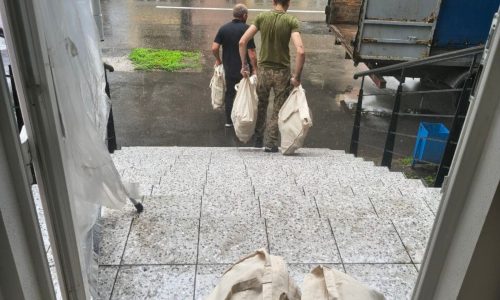
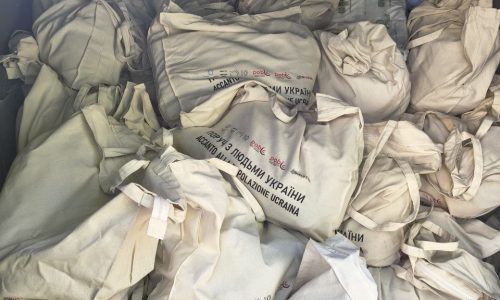
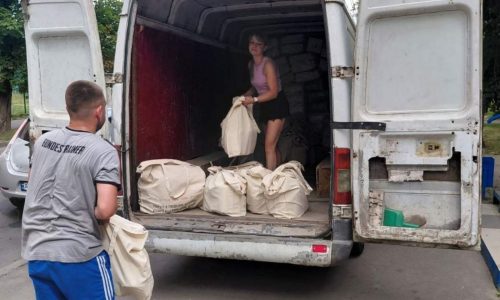
An initial operation made it possible to deliver approximately 15 tons of personal care products. The materials were subsequently organized into kits and distributed to the recipient communities.
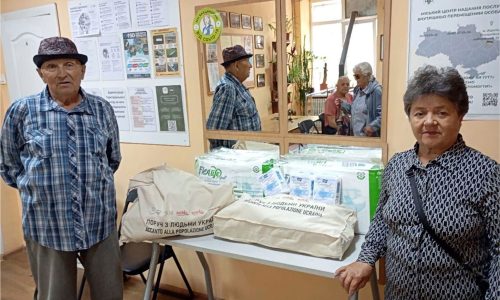
As of June 30, they had been delivered 1,089 kits. The 40% program was primarily intended for people in particularly vulnerable situations and in need, including people with disabilities and older adults.
The aid was not distributed indiscriminately, but based on an assessment of specific needs. In this way, the aid was able to reach those who face the greatest difficulties in independently accessing essential goods.
In a war that damages hospitals, emergency vehicles, and infrastructure, even the availability of an ambulance can determine whether someone can reach a medical facility in time.
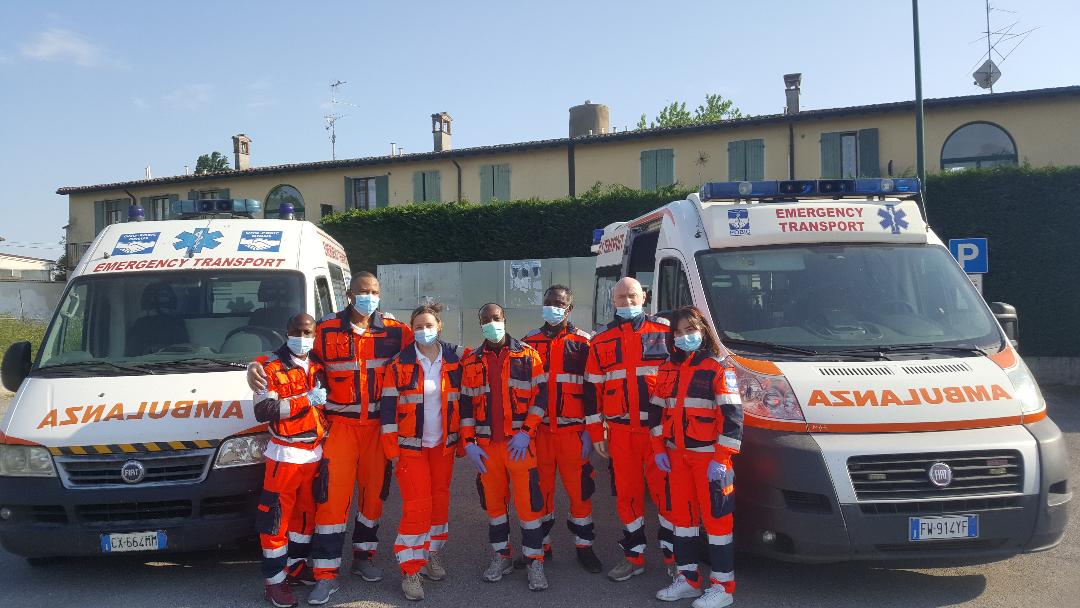
In 2023, after a missile fragment destroyed the only available rescue vehicle in the town of Nemirov, POBIC donated to the community an ambulance retired from service in Italy, but still fully functional.
The vehicle was transported to Ukraine along with medicine, clothing, and basic necessities. It was a small-scale effort, but one that restored to the community an indispensable tool for emergency transportation.
Operating in the most affected areas means dealing with unstable security conditions every day.
During the Acqua Viva project, POBIC was unable to reach certain locations directly because travel there would have required armored vehicles, military authorizations, and special security measures.
To avoid exposing the Ukrainian staff to excessive risks, a portion of the distributions was entrusted to the municipalities that had requested support. The local administrations themselves documented the delivery of the aid.
The photographs taken in these circumstances may appear simple, far from the aesthetics usually used in fundraising campaigns. Their value lies precisely in their authenticity: they recount what was possible to do in the actual conditions of the area.
The crisis in Ukraine is far from over.
As time goes on, a war may take up less space in the news. This does not mean that the needs of the people experiencing it have decreased.
More than four years after the start of the full-scale invasion, in Ukraine, approximately 10.8 million people still need humanitarian assistance. The United Nations Humanitarian Plan for 2026 aims to reach 4.1 million of the most vulnerable people, particularly in areas most exposed to fighting and attacks on civilian infrastructure.
According to the World Health Organization, 3.6 million people are still internally displaced within the country. For many of them, leaving their home meant interrupting medical treatments, losing family networks, and having to rebuild their daily lives in conditions of great instability.
In this context, helping Ukraine means continuing to respond to needs that have not ceased: healthcare, emergency transport, personal care products, basic necessities, and support for people who are unable to provide for themselves.
FIND OUT WHAT WE'RE DOING WITH EMERGENCY TRANSPORT